Showing posts with label Edgar Wright. Show all posts

Edgar Wright...gave us "Head" at screening; Micky Dolenz charmed!


When it was announced that "Head" would screen locally at the New Beverly Cinema - for the "Wright Stuff" Festival of Films - I marked my calendar to be sure not to miss it (especially in view of the fact Micky Dolenz was slated to appear).

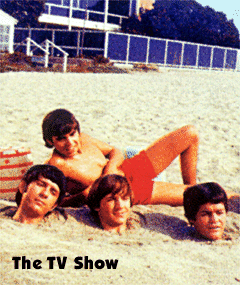
As I recall, I'd dash home to catch the popular "Monkees" TV Show after school when I was a teen. Commercials notwithstanding, I'd step into the fab four's fantasy world for a zany thirty minutes or so to delight in their offbeat antics and mix of upbeat catchy tunes.

Basically, the comedy was about a fictional group - "The Monkees" - who were struggling to attain fame as pop artists in the challenging music industry.

Each week one of the boys - each had their own distinctive personality trait with an appeal that varied from fan to fan - would end up in some crazy fix. But, in the nick of time, the other zany lads usually dashed in on the heels of the dilemma and fathomed a quick rescue.

Having arrived in the wake of the popularity of the Beatles - fans were inclined to question who was better, cuter, or more popular - the mop heads from England or the long hairs made in America?

Yes, that was one of the bones of contention.

The Monkees were not an actual band, originally. The entertaining foursome were fabricated and put-together part-'n-parcel for the NBC Network show.

In the beginning the danceable music was penned by the likes of Carole King and Harry Neilson. In fact, Neilson's first chart hit - "Cuddly Toy" - was pressed and released and made popular by heart throb, Davey Jones.

In time the naive natives grew restless, though. That is to say, the boys wanted more creative control and a say in their image and the opportunity to flesh out their musical talents given their obvious potential.

The lads toiled long hours, eventually felt the strain, and the sh** finally hit the fan when the show went belly-up. Kaput. Much to the dismay of die-hard followers.

Amidst the throes of being split asunder, NBC announced there would be a parting swan song in the form of a feature length film - "Head".

I recall the fiasco like it was yesterday.

"Head" was a big question mark to some, a disaster to others, and downright difficult to fathom. For the most part, the Monkees' fan base was irate.

In fact, there was a deluge of protests, cries of discontent, and reviews of the stinky rotten tomatoes kind.

Yes, that's how I remember it.

So - when Dolenz arrived at the Q & A - I was intrigued by the thought that here (at long last) the truth would be revealed.

Right off the bat, Dolenz - fashionably-attired and trim for his age - noted that Jack Nicholson and Bob Rafaelson scripted the offbeat comedy as a sort-of homage to their true personalities.

Originally titled - "Changes" - the 90 minute feature was renamed "Head" along the way.

In some quarters it's been alleged that Jack came up with the title with a mischievous intention in mind. It's been conjectured that with the project so-named - on opening night - the Oscar-winning actor would have the delightful wicked opportunity to proudly chortle on stage in front of a rapt audience,

"And now, the producers give you Head."

The truth remains unknown.

Dolenz alleged that the title "Head" surfaced by virtue of the fact it was about the interior thoughts of the Monkees and the cerebral "trip" they were going through and that sort-of metaphoric "thing".

In fact, according to Dolenz, the troop headed off to Ojai for three days to wrap around some ideas in their foggy noggins with the specific aim of conjuring up a proper send off for the adoring fans.

"Jack smoked a lot," Dolenz joked.

The others, too.

Essentially, the purpose of the trip - there's that word again - was to mull over the concept. So, Jack pushed for a respite from it all where the guys could "open up". Bottom line, the filmmakers wanted the chance to take a peak into their personas with the aim of best capturing their unique heartbeats on celluloid.

The conversations were taped, tossed in a trunk, and then played back for a duration as the writers toyed with the script.

At the screening, Dolenz confirmed there was a growing discontent in the early days when the Monkees TV Show was originally taped. However, he stressed that there was a concerted effort by all concerned to turn - "the sour grapes into edible fruit" - near the end to satisfy the boys as much as possible.

Dolenz noted, for instance, that producers were inclined to allow the musicians to pen songs and have creative input into their characterizations on the small screen.

After that, they no longer felt like mere puppets.

But later, the Monkees fell apart at the seams.

"Head" was to be the tour-de-force to settle scores once and for all.

The difference between the TV Show and the movie - as Dolenz astutely put it - was quite simple. The NBC comedy was about an imaginary band while "Head" sought to unmask the fab four and their idiot box images.

"Head" was heady for its day. A real "trip".

A handful of the scenes are psychedelic, reminiscent of the Beatles "Help", and at times hint at characters drug-induced and "acid"-laced.

In fact, at the packed screening Micky joked,

"I just dropped some LSD and intend to just sit back and trip."

Edgar Wright - the magnetic host - piped in that he wanted to get "stoned", too.

But - because the Q & A loomed ahead and there were "Master of Ceremonies" duties to fulfill - it was a foregoing conclusion that he'd stay straight to keep the night's festivities on track instead of spiralling off the deep end!

"Head" is rife with scenes depicting the "old guard" of Hollywood.

And - through a handful of clever machinations on screen - the boys manage to deconstruct the studio system, turn-on-end the status quo, and all-the-while poke fun at the Hollywood factory assembly-line.

Throughout the film, the Monkees struggle to escape from an ominous black "box".

Said Dolenz,

"The box symbolized the limitations and the space the band was trapped in and trying to get out of."

The containment was everywhere: in the back room on the sound stage where they unwound before taping, sequestered in the limo on the way to the stadium, backstage at the packed concert halls - and, of course - while ensconced at local Hotels.

In essence, the "box" represented "the head" of the band members and the ongoing tumultuous "trip" and myriad of complications unravelling out of control.

In sum, no one really seemed to know what "Head" was about.

Why was the Coke machine was blown up, for instance? What was the symbolism, there?

Dolenz laughed,

"Maybe it was a just a kick for Jack to do that."

To some, the war scenes were a metaphor, too. The inference was that the Monkees were "warring" with bosses at NBC, fighting for creative input, or quite simply wrestling with a growing state of discontent.

Dolenz noted that at the premiere "Head" was not screened end to end. Instead, several moviolas were strategically placed around the set so that the viewer could take a peek at each segment here and there at whim.

"It didn't matter where you started or ended. Sort-of like what the film was about. No start, no end. In sum, it didn't matter where you dropped in or out for the screening experience."

When actor Victor Mature loomed large on the screen in a couple of key scenes, the mainstream Hollywood Star was perceived as an important symbol.

"The epitome of the old Hollywood," Dolenz theorized.

At this juncture, Dolenz elaborated.

"On the Monkees TV Show the execs urged us to ad-lib and be spontaneous and act impromptu."

As a result, a "production mold" (that was tradition) had been broken, the former Monkee opined to the rapt audience.

"On the lot, they hated us and what we represented."

In my mind's eye - the "mature" reference implied just that - young men maturing, coming of age, and growing up.

In contrast to the other feature - "Beyond the Valley of the Dolls" - that was on the double-bill, "Head" has held up over time.

As a whole - in its finite world - it appeals.

Judging from the audience reaction, the filmgoers were impressed.

In sum, "Head" is a neat and tidy package - a summation of the Monkees' demise - wrapped up joyously in a jazzy box with an eye-catching tidy bow.

Unfortunately, no one understands the contents.

That is the thing about obscurity.

In it's rich soil - profound ideas are capable of grabbing hold - and perpetuating a myriad of myths.

Lucky for Jack and Bob.

The "box" is impregnable, really!
John Landis...shocks audience at screening; quips about Lady Di, Bob Dylan, Universal unsettling!


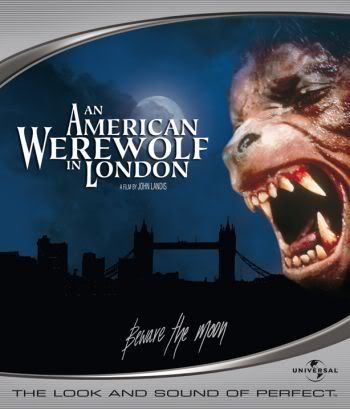
Without doubt, Edgar Wright's popular "Festival of Films" peaked with the appearance of John Landis at the screening of the feature film - "American Werewolf" - at the New Beverly Cinema a few weeks ago.

By 7 o'clock, the dimly-lit street was lined with an eclectic gaggle of excited film buffs hankering to get inside the theatre to participate in the much-ballyhooed event.

Host, Edgar Wright - celebrated director of "Shaun of the Dead" - appeared to be a little overwhelmed as Landis took charge of the stage. The Twilight Zone director stood before the audience confidently. In fact, the seasoned auteur was in top form, except for a raspy gangster-style voice which he attributed to a bad cold.

When a filmgoer asked Landis if there was any flack over the "end" scenario in "Werewolf" - he laughed - repeating what he said to the suits matter-of-fact at the time.

"Heh, he's dead." What can I say?

Landis conceded, though, it was not an easy-go mustering up a green light for the feature to be shot on location in London (England). The script was originally turned down by all the majors (same old same old), and passed on by biggies like Don Simpson, Barry Miller, and a handful of other wary industry-insiders.

Paramount begged off, too, for instance.

Then, the whiz kid maneuvered a meeting with "Gubers & Peters" over at Polygram - "who ran that company into the ground, by the way" - he noted, in an aside. Turning to Wright, he flippantly noted that their offices used to be situated where the "Euro Trash" restaurant is now.

Yeah, his conversation was spiced with clever jibes, insightful gems about folks encountered along the highway, and keen insights on the biz.

Although he was grateful a deal was pacted for "Wolf" - he accused both Gubers and Peters of - "never even reading the script".

The thriller, curiously enough, was written years prior - and although not produced until much later - was the project that managed to get his foot in the door elsewhere to conjure up his wizardry on other projects.

"They thought I was cool and hip because "Animal House" and "Blues Brothers" were under my belt," he chortled wickedly, inferring the opposite was true.

The audience roared.

Yeah, Landis (with salt and pepper "do") and a layer of insulation around the middle - appeared more for-all-the-world the accountant or exec on the sidelines of Tinsel town - than artsy-fartsy film auteur.

In a moment of sudden recall, he laughed that the dynamic duo actually made a pitch for legendary actor Laurence Oliver to play a key role.

"Can you get him?" they asked excitedly.

"Why?" he asked incredulously.

The Oscar-winning actor had just signed on for "Dracula" - so his appeal was broad to Guber & Peters - who were forever whining. Landis stressed his intention to cast "no names" in the key roles - but relented a little.

"Maybe a TV actor, but that's about it," he allegedly responded.

Then, a deal was struck; well - sort-of.

As Landis was about to exit the contract talks - the Gubers & Peters team pestered him for an up-front role as - CEO, producers with credit - or something flakey and superfluous like that.

It took two to tango; in sum, they'd okay the deal with the studio if Landis ponied up $300,000.00, according to the filmmaker.

Landis was flabbergasted.

"On my negative pick-up film, they want credit and cash?"

He wondered aloud if that was legal, but handed them the moolah anyway, in spite of the bad taste it was leaving in his mouth.

"Check your wallet and your watch," he quipped to his partner as they exited.

Ouch!

Wright commended Landis for the memorable soundtrack on "Werewolf" and applauded him for incorporating known chart-risers into the mix.

At this point, Landis was inclined to go off on a tangent about this 'n that.

For example, it burned his butt that an honest effort to strike a deal with songwriter Bob Dylan for a song in his roster to match up with dialogue in the feature, stalled.

"Just my luck," he lamented with a disgusted look on his face.

"Dylan just got on a religion kick and found Christ."

Therefore, because the film was rated "R", the songwriter was reluctant to release the material for the project.

Landis retorted,

"Three weeks later he changed his mind about Christianity. I knew, the guy was a fu**ing Jew."

Although there was a noticeable gasp from a few shocked filmgoers, others broke into gales of laughter.

Then - Landis went on to bit** a little about Donovan - who rejected his bid for the poplular hit, "Hurdy Gurdy Man".

Again, the stars in the mid-heavens were against him. At a minimum - a higher power appeared to be thwarting the creative process - he theorized slightly amused.

Apparently, Donovan was in the process of converting to Muslim. So, the celebrated flower child refused to sign on the dotted line.

"He wasn't even a born-again Muslim," Landis screamed.

"Just a first-time Muslim."

"Yeah, I was fighting both Allah and Jesus."

The audience howled!

Then, he shared with the audience how incedulous he was, when he later learned that Donovan granted release of "Peace Train" for a Volkswagen Ad. The sinister, ironic implications, hit the fan.

Landis never lets up, does he?

When talk focused on an Elvis number Landis was inclined to include in the soundtrack for "Wolf", his angst reared its ugly head again.

Apparently, when the Vegas headliner passed away, there wasn't any legally binding will. So, the estate went into probate and subsequent limbo.

Landis proceeded to reveal the sordid tale about the battle for control of the estate.

Colonel Tom Parker was suing RCA for a piece of the pie, for instance. And, to make matters worse, so was Priscilla. In a counter-attack, RCA launched litigation against both the Colonel and Priscilla, which complicated issues further.

In sum, a whirlwind of knotty legal proceedings threw a monkey wrench into the Landis plans. Not to be dissuaded, and optimist that he was, Landis met with the Colonel first (at the Polo Lounge) and later with Priscilla (elsewhere).

At this juncture, Landis accused El's manager of taking nine dollars out of every ten dollars earned; basically, he lambasted Parker for ripping Presley off.

However, Landis was a little off-base there. Old news!

In show business, it was a well-known documented fact that Elvis was keenly aware of the money Parker was drawing on the payroll for acting as chief wrangler in the "kid's" music career.

El was inclined to leave a wide berth for the Colonel - let the former Carnie man "take care of business" - content to loll about, play with his handguns, and pop a few spritely-colored pills along the way.

Maybe the endless tripe - poor quality projects, for instance - caused the star's depression and exacerbated the extreme highs and lows. But, make no mistake about it, Elvis was pretty much in control and many witnesses can attest to that.

Landis concluded his anecdotes by remarking,

"Well, Elvis was white trash."

A fractured groan signaled disbelief in the audience.

At this point, I'd be remiss if I didn't note for the record that the Landis comments (remarkably off-putting as they were) did not appear to arise from any particularly mean-spirited place - especially those uttered in respect to Dylan and Donovan.

With certainty, I surmise that Landis is an equal opportunity insulter, who takes pot shots at everyone while caught up in the headiness of the moment without thought.

Clearly, Landis is not socially or political savvy enough to fathom the consequence of such conduct, nor is he ever mindful of how hurtful or regrettable they may be.

Surely, if a man admires an artist's work - and negotiates fervently to marry the creative musings in a collaborative effort with his own - there is a basis for concluding that the man in question is not a racist, bigot, or some such thing.

However, a Lady Diana remark crossed the line, in my opinion.

For example, when a filmgoer asked Landis about a "credit" at the end of the reel for the "Princess of Wales & Prince Charles" - without hesitation - he blurted out a "vile" remark in respect to Lady Di which I won't repeat here.

Judging by the response of a few audience members (and the look on his own face) Landis - most assuredly - was struck dumbfounded by the awkward silence which hung thick in the air.

He quickly alleged the vulgar misspeak leapt to the fore because of an ongoing joke among his closest buddies. The comment didn't cast an aspersion on her name or reputation, but it was ugly.

Due to the nature of her death - and in the wake of the sorrow expressed by those who held the Princess in high esteem - Landis overstepped the bounds of good taste and decency.

I trust he's reeling at the thought of his actions today.

In an effort to move things along, Wright interjected that "Wolf" was ambitious.

Landis noted it was an important film in England.

Ever the good diplomat, Wright quickly asserted, "In the U.S., too."

In discussing the logistics of shooting overseas, Landis casually made reference to the British Quota Plan which a handful of the filmmakers in the audience were unfamiliar with. So, he offered up a mini-lecture on the subject, after quipping, "You don't normally learn about this in Film School."

After he quickly reviewed the point system used for hiring English and American talent in the film industry, a couple of anecdotes made more sense to the audience mostly populated by a mid-twenties to late-thirties age demographic.

A similar program exists in Canada to guarantee equal employment opportunities.

In another blooper moment, Mr. Landis curiously remarked,

"Thatcher, the Anti-Christ, drew a stake in the heart of the British Quota Plan and killed it."

"Gee, don't know why I said that," he added sheepishly.

Landis theorized that the "New Cinema" - hailed for a nano second or two when it firsts bursts onto the scene in Cinematic History every decade or so - was not due to the sudden insurgence of new talent; but rather, because Governments allotted funding to start-up projects which previously floundered for lack of seed money.

Schools like - Fassbinder's "New German Cinema", "The Kitchen Sink" school, and the Italian Neo-Realism movement - evolved that way, he conjectured.

The eye-catching scenes for "Wolf" in Piccadilly Circus were problematic and posed headaches; mainly due to the fact the IRA bombing crisis was ongoing in London at the time of shooting.

To complicate matters, there wasn't any "permit system" in place. Generally, Landis noted, the decision to grant filming was left up to the "Bobby" on the beat.

Yeah, they could be bribed, he alleged.

The privilege of filming in the square was allegedly revoked due to the outlandish antics of the production crew on the set of "Jokers".

As the legend goes, a few years ago, the 1st assistant tossed a smoke bomb into street, impromptu. Then, the ballsy crew man shot the mayhem off the cuff with a hand-held camera. When the sirens signaled the "Bobby Patrol" was on the way, the naughty lenser hopped into the back seat of a Taxi and dashed off.

The astonished crew was left to deal with the law.

In the aftermath, Landis was only allowed to shoot one-to-two minute film sequences at the bustling tourist spot.

As the entertaining evening sped on at the New Beverly Cinema, Landis fondly recalled his first jaunts to England.

He waxed poetic about the quaint old movie houses and fondly recalled that projectionists used to run lavish 35 mm commercials by great filmmakers like Fellini, Ridley Scott, and others.

Now, he sadly noted, the old movie houses - one that was booked for the shoot, in particular - had fallen on hard times and were forced to screen adult porno.

In fact, the first day the crew arrived to set up key scenes, a classic flesh film - "The long Sword of Siegfried" - was screening.

"If you could see the crew's faces," he laughed hysterically.

"They were thinking to themselves, what kind of a project is this anyway?"

Ironically, "American Werewolf" ended up garnering a "BBC X" certificate in England, which is on par with the dreaded "R" rating in the U.S. and Canada.

"Odd," - noted Wright (an Englishman) - "A short time later, any old Joe could watch it on the BBC at home at 8 p.m. on the family hour."

Obviously, the success of a feature depends on the advertising, as well.

The poster featuring two white guys in an alley, peering suspiciously at a black guy, didn't go over well.

"No ni**er will ever go see that," Landis swears Richard Prior screamed.

There he goes again!

So, when the advertising team focused on exploitation themes instead, the poster transformed into a large nightmarish face of a wolf.

"Horror scripts springing from published literary works are key," added Landis.

"The patina of a Dracula or Frankenstein are capable of securing a green light and distrubtion," he asserted.

When "Werewolf" was first screened, Gubers & Peters hated it. The suits did not hold back in their pointed criticisms either; allegedly - they offered up insightful remarks like "F**k this" and "F**k that".

Landis astutely figured "that was that".

Since the raw footage depicted gory scenes which were the most offensive to Gubers & Peters, he reasoned the worst was over and that there would be no further cause for alarm.

So, he prepared an answer print.

As he demurely put it, "The best way to go."

"Not one cut and they loved it," he beamed!

The audience was all ears when lore about Hitchcock was offered up.


Apparently, both Landis and Hitchcock were ensconced in Bungalows at Universal. A fan of the film great, Landis noted the Englishman screened movies all day to keep abreast of the celluloid imaginings of his peers.

Allegedly - the director of such great film classics such as "Psycho" and "Rear Window" - hated it when the filmic style of other directors was referred to as "Hitchcockian in Nature".

I laughed inside.

You see, a few months ago - after screening a handful of short movies by an up-and-coming director - I noted the handful of intriguing film scraps were "Hitchcockian" in style. Intriguing, that Landis brought that issue up.

From the get-go, a comment which smacks of such a suggestion (in my humble opinion) is not only a compliment to whom it is directed - but to Hitch - as well.

While a director's work may hint at the style of Hitchcock - the truth of the matter is - Hitch raised the bar so high that one can only come "this close" to compare.

Yeah, Mr. Hitchcock is in a league of his own. So, it's a plaudit, yes?

Curiously, Landis noted that Hitchcock not only disliked the films of Brian De Palma (who, Landis jokes - he used to like - until he got to know him) but was also disturbed by the idea that Mister De Palma remotely considered his work on par with his own.

When Landis suggested it was an "homage", Hitchcock allegedly retorted in his own inimitable way, "It was fromage".

Homage is one thing, theft quite another.

Landis claims that on more than one occasion - after he was nestled into a comfy seat with popcorn in hand at a theatre - it would become apparent that a filmmaker had stolen from him on screen.

"You owe me money, a**hole," he'd scream at the silver screen in jest.

The quirky director has a healthy disdain for the studios - their greed, for one - which is fueled by the fact they have little sympathy for the up-coming underdog in the industry.

"All they want to do is make money."

When a fan asked about the documentary - "Beware of the Moon" - Landis' first response was a paranoid one.

"Are you a plant? Where are you? Let me get a look at you," he laughed, as he peered into the bright overhead lights squinty-eyed.

After some background on the subject, Landis pointed out that a young documentarian - Brad Davis - ran into a snafu with the project. For starters, it was tough landing releases because Universal bought Polydor - and subsequently - the rights to footage used in "Beware".

But - with some clever legal manipulation and decisive wrangling - the sympathetic film director managed to carve out a deal for the fellow. Commendable!

Mr. Landis is a great storyteller.

From the highways and byways of his life - he not only manages to offer up precious nuggets of wisdom - but insightful peeks into the fascinating personalities of those he's crossed paths with in the topsy-turvey world of the film industry.

In sum, he's downright entertaining.

It's evident that he's rolled with the punches, flowed with the tide - and through it all - uncovered a self-evident truth.

Careers are not written in stone.

"I've been Fu**ed over by a long line of people," he laughed.

In the long and short of it, the good old days - in England - were the fondest.

"I was a pig in s**t," he recalled dreamily.

After controversial comments uttered that evening, he may be in pig s**t again!

Shane Black...deconstructs at screening of Boy Scout & Kiss Kiss!


A homeless man looked up at the marquee of the New Beverly Cinema - noticed the caption emblazoned in bold letters across the front - and quizzically pondered, "What is the Wright stuff?"

For local film buffs, it was not a difficult question to answer.

The "Wright Stuff" was a festival of films which screened at the Art Film house - not necessarily the "right" stuff - but the stuff that director Edgar Wright "likes".

In fact - it occurred to me during the run of films - that Wright may be well-suited for a career in Public Relations.

For example, on one evening in particular - with writer/director Shane Black in tow - the mercurial little showman managed to enthuse a captive audience over a couple of films - "Last Boy Scout" and "Kiss Kiss Bang Bang" - which did not fare so well at the box office or muster up much critical acclaim.

As the old lyric goes Edgar, "You could sell an Eskimo snow".

Just before the lights went down and "Last Boy Scout" lit up the screen, Edgar raved about a film he argued "deconstructed" the genre. In addition, he had a shopping list of highlights in the Bruce Willis big-budgeter which he alleged set the film apart.

Well, fortunately, I opted to focus on the "event" rather than review the film.

Although there were a succession of rapid-fire hilarious quips and one of the best henchmen demises on screen - the scene with the puppet was imaginative too - the opening credits were ho hum. And, the explosion at the end was not funny or riveting, either.

In sum, "Boy Scout" was not ahead of any curve by any stretch of the imagination, Edgar!

Roger Ebert said in his review,

"As for my thumb, I'll use it and my forefinger to hold my nose."

Wright gusheth a bit too much; but, the packed house didn't appear to mind.

But - it's important to note - this is the crowd that roared and went gaga over the previews for films like "Action Jackson" and those starring B-list actors Segal and Chuck Norris when the clips splashed wildly across the screen!

Yeah, when Wright astutely noted "Boy Scout" was super-pumped with testosterone- boosting action, this enthusiastic crowd was ripe for the kinky sensations to wash all over 'em.

In fact, when Wright laughingly tittered - "I'm feeling a little bit homosexual because of it" - the feeling was mutual for many in the theatre, I'm sure.

Yeah, the guy is an astute pulse-taker.

Although Wright argued that Shane Black's aim in "Boy Scout" was to deconstruct the genre - when called up during the intermission - Shane Black disagreed.

Actually, Black hinted that concessions were made to - as he demurely put it - "get a**es in the seats" at the directive of the studio big-wigs.

Black was "pleasantly surprised" by the turn-out for the screening - but wondered aloud if the packed house was due to the "silliness of the retro moment" - or inspired by a sincere interest in "Boy Scout".

Some were taken aback when he confided that - in his opinion - the movie didn't work as a whole. Actually, the screenwriter harshly criticized the Willis vehicle.

Was he testing the waters?

Was the sting of a bad review still gnawing at him?

"Too choreographed," he shrugged. But, he admitted he liked the first half hour.

In addition, he was a little reluctant to reveal how much of the original scripted material ended up on screen, which scenes were rewritten, or how much of the plotline was overhauled to suit the suits.

The writer acknowledged he was frustrated over the fact there appeared to be a demand for smash-ups, football stadium theatrics, and odd-ball stunts.

Ultimately, he lamented that it was off-putting to have to adhere to the trend of the day.

When the subject turned to detective writers, Black confessed he was a great fan of Mickey Spillane and Dashiell Hammett.

Yes, he's fond of the old gumshoes.

In fact, he often draws on their rich history to lend background and weight to his own projects - in a bold-faced creative effort to make them resonate more fully - he conceded.

When he alleged that an homage to a "Private Dick" was a phenomenon peculiar to the American Cinema, Edgar Wright quipped,

"And, Sherlock Holmes?"

Black was quick on the uptake, "He did cocaine by the way."

At this juncture, the repartee between the two became quite engaging. Yes, Black and Wright were transformed before our eyes into a genuine stand-up comedy team.

The conversation drifted, funnily enough, to movie ratings. Both directors concurred that an appropriate rating appeared to depend on how many times the word **ck was actually used on screen. And, in what specific context.

"If you said - 'The car is **cked' - it's a PG-13," Wright joked.

"And, if you said - 'I want to **ck the car' - then, it would land an R rating," Wright added without batting a pretty eye.

The audience went wild.

Then, Black piped up that films featuring "cigarette smoking" tended to get a tougher rating, too.

At this juncture, it was noted that Black's original script for the action-thriller starring Mel Gibson (Lethal Weapon) - sold for the highest sum at that time.

In spite of the fact it was a first offering from a whiz kid - all of 22 - yet.

Memories of Dick Donner, who directed the project, were amusing to listen to.

Black kidded that the crew were forced to blindfold the director whenever they went anywhere because every time something caught Donner's keen eye, he hankered to squeeze the compelling images into the movie somewhere. The object of his affection might be a festive Indian wedding, a subtle metaphor, or whatever hit up his fancy!

When a film buff in the audience asked how Black worked - he asserted that knowing how a film would fade to credits - was not the be all or end all at all.

"It's important to know where you're going, though," he quickly added.

Maybe that's what's wrong with "Kiss Kiss Bang Bang".

There wasn't enough preparation or thought put into the ending; hence, the close of the odd-ball detective story stinks.

Speaking of "Kiss Kiss Bang Bang", according to Black, everyone in town turned the script down. Eventually, Joel Silver courageously backed it.

Black claims the reason distribution was poor, and the reason it basically got shelved, was because one exec at the studio originally passed on the project.

"He sought to bury it," Black accused.

The argument sounded ludicrous to me.

The fact is - while arty and somewhat original with a lot of flair - "Kiss Kiss" was not a solid or well-produced feature. In my estimation, that's why it bombed.

Black went on to further note that he was "okay" with the fact the intriguing feature was not "given a chance".

He boasted that he would rather have people stride up to him and say,

"You got a raw deal because that was a great film."

Better that, he concluded, than to have to take potshots from people for having produced a hit.

Frankly, that sounded like a lot of twisted logic to me. At this point, I was not so sure that Shane Black was entirely honest.

For example, at times during the Q & A, Black walked a fine line. He was inclined to tease a little - hold back a lot - then offer up just enough background info to titillate.

In the end scenario, he left a lot of questions unanswered.

Curiously - when one fellow in the audience asked about his prior writing relationship with Decker - he was hesitant to respond, at first.

After all, it has just been revealed that Decker - his former writing partner - had been accused of being "cool" towards Shane Black in Q & A sessions at other events elsewhere when his name was brought up.

However, in what amounted to a diplomatic moment, he applauded the writer's talent.

And, went so far as to state, "I'd work with him again."

Then, he uttered almost under his breath, "But..."

Yeah, there's always a but.

From his standpoint, he and Decker were both Alpha males, bent on getting their own way. In gay terminology - both were "tops" - neither versatile enough to go "bottom" to make the partnership of "strange bedfellows" work.

In "Kiss Kiss" - Black chose to feature a couple of off-beat characters he affectionately referred to as the - "fu** up" (played by Robert Downey, Jr.) and "the fag" - a role inhabited by temperamental actor, Val Kilmer

At that time, no one wanted to hire Kilmer or Downey, for obvious reasons.

He theorized the reason both were so cooperative on this project was due to the fact that "both had to shape up and fly right" or suffer the consequences of losing further footing in their respective careers. Because both needed the project, they were humble, according to Black.

Then, he made a curious comment - something to the effect that "the scenario" would obviously change - when "both were back on top".

But, he corrected himself.

"Well, Downey will always remain humbled."

Inferring, of course, that Kilmer will no doubt be up to his old tricks once his fortunes change. If they ever do!

The audience roared!

He noted for the record there were no on-set troubles with either actor; in fact, he alleged there were more problems with actor Bruce Willis on "Boy Scout".

"Bruce wore a hairpiece in the movie, by the way," he casually pointed out for some inexplicable reason out-of-the-blue.

After noting that he turns 46 next week, Mr. Black confessed to recent Botox injections.

"My face is swollen and feels like a hose injected water into it."

Ah, perhaps that explains his tendency to stare at the floor during the interview. Was he a little self-conscious, perhaps?

Maybe he was embarrassed a little by the fact that he was garnering so much attention for a couple of forgettable films that didn't deserve the attention?

In a body of work, they're important, though.

It will be interesting to see where the man has positioned himself in coming years.

Life Achievement Award? "King" of the Hill?

Maybe.

The remarkable filmic style on display in "Kiss Kiss" is difficult to ignore - especially in view of the fact - it signals a potential for greatness pregnant with possiblities.

We'll see.


Paul Williams...Hollywood screening of "Phantom of the Paradise" triggers an insightful heart to heart!

Edgar Wright's Film Festival - "The Wright Stuff" - recently roared into the theatre with a few high-profile celebrities in tow.

At the screening of "Phantom of the Paradise" - which was paired with the musical comedy Bugsy Malone - there were so many filmgoers jostling for seats that they were inclined to wait patiently in a long line which snaked along Beverly Boulevard in front of the theatre and offshooted down a dark side street into the great beyond.

Edgar Wright - the adventurous director of two recent blockbuster hits - "Shaun of the Dead" and "Hot Fuzz" - promised surprise guests and he did not disappoint.

It was rumored that Paul Williams - composer of the film score for "Bugsy Malone" and the unlikely star of the cult phenomenon "Phantom of the Paradise" - was on hand to field questions and sign autographs in a Q & A session during admission.

The crowd was tame, but antsy.

Normally, the New Beverly Cinema opens promptly at 7:30 pm, but on this harried occasion - for some inexplicable reason - ticket-holders stood in line for over an hour before the doors were flung open and excited fans were allowed to storm the theatre in search of the best available seats.

Then, a few die-hards had to wrangle their way through a second more oddly-configured line to order up tasty snacks at the confection booth.

Heh, business is good!

There was a lot to take a gander at while stumbling through the queues; a film crew - for instance - logging footage for a documentary on Paul Williams, surreptitiously hung around the lobby catching candid shots of the attendees.

On the street, Scott Caan - son of James - caught the ire of a few filmgoers when he persistently revved up his motorcycle out front - some say - in a selfish attempt to nab some attention.

After working with the actor on one project, Robert Duvall was alleged to have snidely remarked in a TV interview once that young Caan, "Occasionally needed a pat on the back."

No one was offering it last night; they were too preoccupied with the celebrated guests in attendance and the adrenalin rush of the festivities underway.

Edgar Wright was in good form, dashing around the theatre like an excited kid with a new toy.

After all, this was his baby.

Edgar organized "The Wright Stuff" - a festival of his favorite films - which included preparing the press releases, lining up all the projects, and arranging for special surprise celebrities to appear.

Before the main features screened, the handsome heavyweight treated the enthusiastic audience to a short video he directed and produced - aptly titled - "After Hours" - which featured music by the "Blue Tones".

Without doubt, the award-winning auteur has on-camera talent, as well.

I particularly enjoyed one dance number where he planted his hands firmly on a table top, half-turned - thrust his little butt into camera with a twist and a kick of agile legs - then popped back upright to finish the snazzy choreographed number which was a sassy tribute to "Bugsy Malone".

During half-time, Edgar stood up-front and center with Paul Williams, and managed to extract some intriguing behind-the-scenes gossip about the two projects, too.

Apparently, "Bugsy Malone" came about when the director - Alan Parker - put in a call to the Paul Williams tossing up an idea about a musical featuring kid gangsters.

The tale started out as a bedtime story for his children. Each night, as Parker tucked each child in before their journey on to dreamland, a new chapter was added. Then, one thing led to another.

The visionary director met with the songwriter in Las Vegas - where Williams was performing on stage at the time - and hammered out the details.

Curiously, the duo hired army brats for all the key roles.

In respone to a query from the audience, the award-winning composer noted that the voices of the young performers - including Jodie Foster's - were dubbed to create a jarring odd-ball effect.

"Bugsy Malone" was a personally rewarding experience for Williams, who joked in an afterthought,

"I got to keep a lot of the clothes, too."

In reply to another fan's question, the charismatic guest confirmed that he started out as an actor in a throw-away role in the film, "The Loved One".

He laughingly noted to the audience that he was difficult to cast for two reasons; for starters, he gave the appearance of being a kid. Secondly, when placed next to a child actor, he looked - for all-the-world - like a youth with a hang-over!

The audience roared!

At this juncture, Williams had a confession to make.

For the record, he admitted to gaps in his consciousness over the years due to acute alcoholism.

For sure, the alcohol "got the better of him" on more than one occasion - and clouded his memories - he admitted without shame.

In respect to composing, he says the career path presented itself in a round-about-way.

On a set one day, he allegedly plucked up a guitar and started to strum a little, without much thought or consternation.

Robert Duvall turned an ear to the musical whimsies, and finding them appealing, brought them to the attention of Arthur Penn.

Slowly, thereafter, his composing career unfolded as if directed by a finger of fate.

When asked about his favorite tune in "Phantom" - without hesitation - he noted with pride it was the haunting "Old Souls".

On the heels of this revelation - he added sadly that - "Old Souls" has never been recorded yet. Gloria Estevan expressed an interest at one point, but nothing came of the overture.

Williams - looking more the record exec than pop star or composer - was smartly attired in a sharp black suit which was tastefully matched up with a blood red shirt which added a dash of color to the mix.

To the surprise of many, the diminutive star noted that "Phantom" was a big hit in Winnipeg!

He surmised that the movie hit gold in the city north of the border because parents dropped their kids off at the movie theatre "to devour" Phantom for hours on end - while they went off to shop and do chores - confident that their "babysitter" would keep them under a spell 'til they returned to gather 'em up.

Williams proudly noted for the record that there is an annual "Phantom" festival in Winnipeg, now. The songwriter attended the festivities for the first time this past year.

Go figure, "Phantom of the Paradise", is also popular in Paris.

"Well, they love comedy over there," he chirped.

He labelled Phantom - "a cartoon with real people" - and added that when it was originally produced the project was timely.

"The Vietnam War was raging and the body count was high," he recalled. And, "The idea of an assassination - like the one depicted in the film - did not appear to be so far-fetched."

In sum, he surmised that the foregoing reasons may have accounted for the popularity and success of "Phantom" during that era.

Near the end of the Question & Answer session, Paul Williams lamented to the audience - "I love to act" - as he turned and gave Wright a little wink.

Edgar, I think that was a hint. Williams is pining to be cast in one of your films!

As if there wasn't enough headiness for one night, there were more surprises on tap, too.

As promised on Wright's "myspace" web site, there was a surprise feature beckoning at midnight, too. Around the witchin' hour it was ceremoniously unveiled - "Ishtar".

To get the ball rollin', Quentin Tarantino rushed up, baseball cap askew, and gave a brief intro to the delight of everyone.

He noted that when he first saw "Ish", he was gainfully employed at a Video Store in Manhattan Beach.

So, a group of his work buddies proceeded to ensconce themselves in the second row of the theatre at the screening, when - Elaine Mae, director of the Warren Beatty/Dustin Hoffman stinker - strode down the aisle and plunked herself right down in the front row.

He snickered,

"She laughed at everything throughout the entire film."

But shamefaced admitted, "they did too!"

Then, he treated us to his favorite tune from "Ishtar".

With tongue firmly in cheek, he sang out "Hot Fudge Love".

In a quick uptake, Paul Williams argued that were it not for the big salaries of Beatty and Hoffman, perhaps "Ishtar" would not have been so roundly panned by the crtics for having been such a self-indulgent lack-luster over-budget bomb.

I disagree.

Undeniably, the film is still a stinker.

It has stood the test of time in that regard.

But, it was a hoot to take in once again, none-the-less.


Edgar Wright...Festival of "Wright Stuff", New Beverly Cinema! Dec.2nd thru 17th...

Edgar Wright in a reflective moment...


Edgar Wright - director of "Shaun of the Dead" and "Hot Fuzz" - is programming a festival of films (The Wright Stuff) at the New Beverly Cinema to run December 2nd thru the 17th.

Wright not only hand-picked a select collection of his favorite movies for screening, but will preside over many of the events, schedule permitting.

During the course of the festival several surprise guests will make an entrance - much to the delight of fans - no doubt.

The films range from the horror genre to those in the realms of comedy and action-adventure.

There's a quality production to suit every taste, I expect, judging from the press release.

Wright started out directing TV in the UK; in particular, he is known for the cult series, "Spaced".

Shortly thereafter, the zany director wrapped his first comedy feature, "Shaun of the Dead".

"Shaun" won him the British Independent Film Award for best screenplay and the Empire Award for best British film.

In 2007, Wright's second feature - "Hot Fuzz" - was released to critical and financial success, and won him a best comedy nod at the National Movie Awards.

The festival is kicking off on December 2-4 with a double feature.

"Bugsy Malone" (directed by Alan Parker) and Brian De Palma's "Phantom of the Paradise" will surely delight local film buffs who pine for this kind of zany bill-of-fare.

Wright says he's a big fan of these films - in no small part due to the roster of great songs - penned by the lengendary, Paul Williams.

"Flash Gordon" and Mario Bavas spy thriller - "Danger Diabolik" - will be inclued in the eclectic batch of celluloid classics shown over the course of the mini-festival.

Also, two of Wright's favorite action films - "The Last Boy Scout" and the sleeper hit "Kiss Kiss Bang Bang" (Shane Black) - will screen later in the week.

On the subject of Shane Black, Mr. Wright was inclined to sing praises.

"Shane Black has long been a writing hero of mine and these are my two favorite scripts to have been spat out of his typewriter. The first is criminally underrated and the second is scandalously under seen, together they make for a double bill of the finest in neo noir."

John Landis fans may want to take "An American Werewolf in London".

The Landis offering was one of the first horror films to hit Wright - as he demurely puts it - in the "gut".

In Wright's view, the director was at the height of his powers when he lensed it.

"Wolf" is suitably matched on a double-bill with little the horror gem "Tremors" (which stars Kevin Bacon, if you recall).

Audiences will no doubt turn out in droves to catch two zany comedies - "Top Secret" and "Bananas" - which Wright has tapped for the end of the Festival.

High camp will be featured, too.

"Beyond the Valley of the Dolls" is sure to jolt the sensibilities.

"Head" - the Monkees' cult classic - is scheduled to team up with the soapy drama.

Mr. Dolenz is expected to attend the screening, field questions, and sign autographs for fans.

I'm hankering to catch "Raising Arizona" and Sam Raimi's gory offering "Evil Dead 2".

Edgar laughingly refers to the little ditties as an on-the-edge of your seat "double-barreled blast".

Although Wright promises to be the one laughing loudest and hardest throughout the Festival, I'm sure to give him a run for his money.

Edgar, watch out!

Wright Stuff Festival Info: http://www.newbevcinema.com


Blog Archive