Showing posts with label LGBT equality. Show all posts

Gay Adoption Passes Final Hurdle in NSW

After the original narrow passage in the lower house of the New South Wales Parliament, it's been somewhat of a to and fro struggle, but the bill has now finally passed. New South Wales has joined ACT (Australian Capital Territory and Western Australia) in providing for adoption by same sex couples.


Typically, the difficulties concerned attempts to deal with religious objections. The original bill passed in the lower house only after an amendment to provide for some exemptions for religious bodies. In the Upper House, a conflicting amendment was passed to narrow the scope of those amendments, requiring that the bill return to the Lower House - then back to the upper house again.
A BILL giving same-sex couples the right to adopt has been passed by the NSW parliament, after the Legislative Council voted in support of a last-minute amendment to the legislation.
The bill passed its final hurdle in the upper house just after 6.30pm (AEST) today, after MPs backed the lower house amendment.
The amendment, made by Planning Minister Frank Sartor, frees up adoption agencies to act on the wishes of parents regarding where their children are adopted. It was made to temper changes made in the upper house on Wednesday night, which narrowed an exemption from the Anti-Discrimination Act for faith-based adoption agencies. MPs have been allowed a conscience vote on the historic legislation, leading to heated debate in both houses of the NSW parliament. NSW is now the third state or territory to allow same-sex adoption, after the ACT and Western Australia.

Hadrian (76-138)

Hadrian was an accomplished military ruler, but owes his fame more to his success as a wise and civilized leader and administrator, who helped to stabilize the Roman Empire - and for his renowned devotion to his lover, Antinous. After his young lover drowned in the Nile in 130, the Emperor was publicly overcome with grief, and declared the young man to be a god, and founded an Egytpian  city,  Antinoopolis, in his honour.  The new cult was happily taken up bright across the empire, with and at least 2000 bronze and marble busts and statues made to honour him. In Greece at alone, thirty one cities minted coins with his portrait.

Bust of Hadrian’s beloved, Antinous
In total contradiction to some modern stereotypes, there is no sense in which Hadrian could be considered in any way wimpish or effeminate:
Hadrian was a brave, resourceful soldier and an intrepid hunter of bears, boars, and lions. He bore cold and bad weather with stolid endurance. He was bearded and dressed simply. He allowed no ornaments on his sword belt or jewels on the clasp.
His sexual taste, like that of Trajan, a cousin of his father and his predecessor as emperor, was predominantly for teenage boys, though ill-wishers accused him also of affairs with grown men (adultorum amor) and of adulteries with married women. He had no children. He often said that had he been a private citizen he would have sent away his ill-tempered wife Sabina.

Oz State Premier Stands Up To Cardinal Pell, Secures Gay Adoption for NSW.

Breaking news today is that the New South Wales state assembly has narrowly approved a bill to put LGBT and heterosexual couples on an equal footing for adoption procedures. There are still a few hurdles to clear before this becomes final, but (as far as I can tell), with this one, the biggest has now been cleared. This is big news for queer Catholics. The formidable Cardinal Pell made clear his strong opposition - but the equally strong support of the Catholic NSW Premier, Kristina Keneally, appears to have been decisive in providing just enough resistance.
Kristina Kenneally, Catholic and Advocate for Adoption Equality

Perhaps it was the full-fledged backing given to the Bill by New South Wales Premier Kristina Keneally, a devout Catholic, which took the wind out of the sails of opponents. "In forming my position on this Bill, I have considered my experiences as a mother, my responsibilities as a parliamentarian and my conscience as a Christian and member of the Catholic faith," she told lawmakers. Instead of proving divisive, it served to unite New South Wales's main political outfits with Opposition Liberal Party leader Barry O'Farrell also voting in its favor.
This is an important reminder to all of us that the "Catholic Church" is far more than the bishops and cardinals who claim to speak for us. They are fully entitled to speak on behalf of the Vatican and Vatican doctrine - but when they claim to speak on behalf of "the church", research evidence consistently shows that they deceive. On numerous issues of sexual ethics, ministry, and papal authority, the evidence is that right across the globe, most Catholics simply do not agree with orthodox Vatican doctrine.

This decision is also important as another indicator of an Australian paradox. In the global march to family equality, Australia stands out as an oddity. Although surveys have shown that a strong majority of Australians support full marriage and adoption rights for same sex couples, there is still no national provision for either, and both of the major political parties opposed full equality during the recent election campaign. Below the surface, however, there have been increasing signs of a gathering groundswell of support that could soon force the issue. The election result, which produced a hung parliament with increased influence for independents and a stronger Green Party, may show the major parties how mistaken they were - and may pave the way for a major rethink. It is significant that the NSW result came after a "conscience" vote in the assembly (that is, members were permitted by their whips to take their own decisions, rather than following a party line). It is believed that a conscience vote on marriage in the national parliament could attract significant support.

Meanwhile, even as Canberra dithers, there are regular advances at state level, with the adoption decision in New South Wales just the latest of several.   Earlier this week the Tasmanian lower house voted to recognise same sex marriages conducted elsewhere, which means that Tasmanian couples will be able to secure secure legally recognised marriage easily enough - provided only that they are willing to travel abroad for the wedding. (Several countries which currently recognise marriage equality do not have residency requirements. Nepal could soon be another.)

Gay adoption is already recognised in Western Australia and the Australian Capital Territory, which is also the only state to conduct formal civil partnerships. (New South Wales and Victoria maintain less formal domestic partnership registers, which makes it easier for same sex couples to achieve the de facto recognition that in principle they are entitled to - but which in practice can be difficult without suitable documentary evidence of the relationship.)

Each separate move at state level inevitably leaves the population that much more accustomed to the idea of family equality, and queer families increasingly visible as ordinary members of society, deserving equal treatment before the law, just like everyone else. Each advance bring the next one closer, eroding still further the resistance. Even before the vote in last month's election, the Greens were promising to introduce a bill to provide for national gay marriage. When they do, they and the newly influential independents in the hung parliament will aim to secure a conscience vote. I suspect that even if they get one, it is unlikely that gay marriage will pass just yet. However, it is clear that Labour at least lost votes as a result of their stand against equality. The coming vote on a Green bill for marriage equality will not be the last. Sooner or later (and probably the former), the politicians will realise they are on the wrong side of history, and stand up for justice.

Cardinal Pell will soon have a lot more to worry about than adoption equality in one more Australian state.

NJ Gay Marriage Court Initiative Failed.

In New Jersey, the recent focus for news on marriage equality was the unsuccessful political process which aimed to slip legislation in during the dying days of the last legislature, before the new anti-marriage Governor took office. Later, there was a much less well-publicized attempt to pursue a litigation route. Some years ago, the state Supreme Court had ruled that the state had an obligation to provide equal treatment to all its citizens. IT was on the strength of this judgement that the state legislature then introduced civil unions as an alternative.

Experience since then has shown that in NJ, as elsewhere, separate is not equal. After the failure of the political process, six same-sex couples initiated court proceedings to secure the equality which had been promised, but not provided by the political process. That application today hit a road block: the court declined to hear the case.

This looks though, like a temporary delay. The reason given was that the suit must first make its way through the lower courts. Even so, the decision was close - a 3-3 split. Equality could still come to New Jersey. (Marriage opponents probably have more reason to be disappointed than equality supporters do over this decision: they were hoping for a total rejection:
Len Deo, president of the New Jersey Family Policy Council, which supports the traditional view of marriage as between one man and one woman, said, “We were hoping the Supreme Court would just reject the application outright.”
From Washington Post:


NJ Supreme Court rejects gay marriage case

The Road To Equality: How Long, How Long!

After I placed a report this week on the UN accreditation for an LGBT Human Rights Group, I noted in a comment that it is important as we celebrate each landmark (as with gay marriage success), we should also look back and recognise how far we have come.

Sadly, I was reminded this week that we also need to look ahead and consider just how far we still have to go. At one end of the scale, there are still five countries that impose the death penalty for homosexual acts. On the other, not even the most progressive countries have year reached  full equality: there are still only a handful of countries with full protection against all discrimination on grounds of both orientation and gender identity. None of those has a full slate of legal protections.

My interest today was triggered by a report from Canada, concerning the possibly imminent execution of an Iranian man, urging the Canadian government to "intervene". The difficulty in these countries, which are generally pretty hostile to the West in the first place, is knowing how to intervene without aggravating the situation.  The death penalty also still applies in four other states (Saudi Arabia, Yemen, Mauritania and Sudan), as well as in some parts of Nigeria and Somalia.

In search of fuller information I went to ILGA (International Lesbian Gay Association), and downloaded their report  on "State Sponsored Homophobia". This is dated May 2010, so its pretty up to date - but beware. The listing for marriage gives only three countries, omitting Portugal, Iceland Argentina. This a sharp (and encouraging) sign of just how quickly things can sometimes change.
Homosexual acts remain illegal (without the death penalty) in 34 African countries (more than half the total) and eighteen in Asia , in Guyana in South America as well as eleven Caribbean island states, and nine Pacific Island states. Even in Europe,  homosexual acts are illegal in the Turkish part of Cyprus.
Even where homosexuality itself is legal, there are still a few countries where there is not yet an equal age of consent, even in some parts of Europe and North America.

There has been progress with various laws against discrimination of various sorts, but piece-meal protections can never be comprehensive.  There are still only nine countries with constitutional protection against discrimination on grounds of orientation. South Africa led the way in 1994, followed by Canada and Ecuador in 1998, Colombia and Switzerland (2000), Swede (2003), Portugal (2004), Kosovo (2008) and Bolivia (2009).

None of these yet has full legal protection on all the criteria listed by ILGA:
  • Employment discrimination based on orientation
  • Employment discrimination based on gender identity
  • Hate crimes based on orientation considered an aggravating circumstance
  • Hate crimes based on gender identity considered an aggravating circumstance
  • Incitement to hatred on orientation a criminal offence
  • Full marriage equality
  • Adoption by same -sex couples
  • Gender recognition
(Sweden comes closest. It is not included only under "hate crimes based on gender". Not far to go, Sweden!)
So, wherever you are, there remains work to do on the long road to equality, both in your own country, and even more, in the world at large. Why not see what you can do to help?

(However, there was one suprising bright spot: with all the attention and awareness of homophobia in Africa, it was good to see, in a listing of the dates for decriminalization of homosexual acts, Africa is the only region listed where  in some countries  same-sex activities have NEVER been criminalised.  Hats off to  Benin, Burkina Faso, Central African Republic, Chad, Congo-Brazzaville, Côte d‘Ivoire, Democratic Republic of Congo, Gabon, Madagascar, Mali, Niger and Rwanda!)

A Queer Presence at the UN

In a most welcome development, an LGBT human rights group has just won accreditation for observer status at the UN - over strenuous opposition from some GOP politicians.  Among other benefits, this has huge symbolic value - and will enable LGBT lobbyists to directly counter Vatican lobbying efforts lesbigaytrans issues.

From Huffpost:

US gay rights group gets UN accreditation

UNITED NATIONS — The U.N. Economic and Social Council has voted to accredit the International Gay and Lesbian Human Rights Commission after strong lobbying by the U.S. administration.

The 54-member council approved the U.S.-based group's application for consultative status by a vote of 23-13 with 13 abstentions.

The organization, which has offices in South Africa, Argentina and the Philippines, has been trying since 2007 to get consultative status with the council so it can work at the United Nations. The council serves as the main U.N. forum for discussing international economic and social issues.

The U.S. government and 14 members of Congress supporting the application believe the group's application was not approved because it promotes gay rights.

Gay Marriage: Where Next?

In the first six months of the year, three countries have already approved legal recognition for same sex marriage, up from just two last year, and an average of less than one a year during the previous eight years. The pace is clearly accelerating. We could well ask, where next? There are several candidates, some of which could see change quite soon.
The state of Marriage, Europe July 2010
Luxembourg is closely associated with its neighbours Netherlands and Belgium (hence the term "Benelux" countries), which were the first to introduce full marriage equality. At present, the Grand Duchy's legal provision is based on the French PACS, but the government has announced plans to upgrade that to full marriage. In January, the minister of Justice announced  promised that legislation would be passed before the summer recess this year. The  bill was accepted for the session which began last week, and could be passed within weeks.
Slovenia announced its intention to provide legal recognition in July 2009, and passed the first reading of the required bill in March this year. There have been no reports since.
Nepal will introduce full marriage rights for all couples, but this too could take some time yet. To comply with a ruling by the Supreme Court last year, the country is obliged to do so, and has promised to include such a provision in the new constitution currently being drafted. It is expected that this should be promulgated by May 2011.
In Finland, there has been a rapid change of opinion among parliamentarians, who seem to have shifted within months from a narrow majority against, to overwhelming support in principle.  The leading political groupings have both accepted the principle of equality, and earlier this month, the Minister of Justice announced the start of work on preparing legislation. However, this will be a slow progress: the bill is likely to be introduced only in 2012.
In terms of a court ruling last year, Germany is obliged to upgrade its current civil unions provision to "full equality" with married couples. The Government has announced its intention to do so, but it is not clear when it will do so, or how, whether by formal marriage, or by upgrading the benefits of civil unions to "everything except the name". Meanwhile, Berlin has announced its own plans to approve full marriage, which it says is the only way to provide fully with the constitutional requirement.
In Cyprus the Interior Ministry said that the government would "soon" examine the issue of extending marriage, but there has been nothing since.
Albania last July promised laws to outlaw sexual discrimination and introduce marriage equality. The discrimination law has been passed, but the marriage bill has been bogged down in a constitutional dispute: the opposition Socialists and allies party has been boycotting parliament in protest at alleged electoral fraud. Without their presence, the government cannot muster sufficient votes to pass the required change to the Family Code. When (and if) the boycott ends, expect easy passage - but don't hold your breath.
So over the next two years or so, there could be anywhere from four to seven countries approving full equality - and that's just the ones we known of.  There will likely be others coming up unexpectedly. Court rulings, or changes in government, can change things very quickly (Argentina wasn't on the radar even one year ago).
That's full marriage. What of civil unions?

The State of Marriage, South America: July 2010 (Wikipedia)
Ireland's Civil Partnership bill, granting virtually all the benefits of marriage without the name, has now been approved by both houses  parliament, and is with the President for signature.
Venezuela has civil unions legislation currently before the National Assembly. It has the support of President Hugo Chavez, and has already passed the first reading. (Civil Unions are already recognized in the state of Mérida)
In March 2010, Liechtenstein presented to parliament a civil unions bill modelled on that of Switzerland. I have seen no reports of progress since then.
In Chile, the government is currently "drawing up proposals" to extend some of the marriage benefits to same sex couples. It is not yet clear how far these will go, or how soon implementation will come.
The Costa Rican national assembly is "currently" considering legislation submitted by a gay rights group to recognise civil unions.  In April this year, the President, Oscar Arias, announced his support for the measure.

Modern History: Out in the Forces, UK

Over the last year or so there have been many notable anniversaries of landmarks on the way to LGBT equality: 40 since since Stonewall (June last year), 40 years since the first gay liberation march (June this year); 20 years since the first civil unions in Denmark (last year),10 years for those in Vermont (June this year), 5 years for the first full marriages in Massachusetts. Here's one that passed me by - possibly because it's more difficult to pin it down to a specific date in th year, possibly because it will have been missed by the American media that so dominate our news cycle.


2010 marks ten years of openly gay and lesbian members serving in the British armed forces.
Two specific dates are important here: in January 2000 the direct ban on "homosexual" servicemen and women was lifted, in November 2010 the regulations went further, making discrimination on grounds of orientation illegal. If you want a specific date for the ten-year anniversary celebration, I guess you could take a simple average of these two months, and come up - round about now, just in time for London Pride on Saturday, when there will surely be uniformed squads from the army, navy or airforce marching with the rest of us. Unlike the rest of us, they will be PAID for doing so! From a link at "Proud2Serve", I can share extracts from the formal  "DEFENCE INSTRUCTIONS AND NOTICES" for the event:
This year’s ‘London Pride’ event will take place in Central London on Sat 3 Jul 10. Service and Civil Service Lesbian, Gay, Bi-sexual and Transgender (LGBT) personnel will be permitted to march in the parade element. Following the success of the event in both 2008 and 2009, authority is given for serving members of the regular and reserve forces to march in uniform. Individuals marching in uniform on the day will be considered to be representing their Service at a Public parade and as such will be considered to be on-duty and may claim duty travel costs (but not subsistence) within the UK, subject to budget manager approval.


London Pride is a large public event which attracts up to 600,000 members of the public from the UK and overseas. The event attracts worldwide media attention and the very highest of standards are required to ensure that the Services and the MOD are portrayed in a positive light as modern, inclusive, employers that welcome men and women from a diverse range of backgrounds. A high degree of discipline and military bearing is expected from Service personnel participating in the parade. Prior to commencement of the March, individual Service Parade commanders will be expected to undertake an inspection of their Flight to ensure their personnel are suitably prepared for this high profile event. Personnel who fail to make the appropriate Service dress and deportment standards will be removed from the Parade. The orders of dress are as follows:
Royal Navy No 1 Dress with lanyards or equivalent
Army Service Dress/No 2 Dress
Royal Air Force No 1 Dress
Medals are to be worn by all entitled to wear them
London Pride is a large public event which attracts up to 600,000 members of the public from the UK and overseas. The event attracts worldwide media attention and the very highest of standards are required to ensure that the Services and the MOD are portrayed in a positive light as modern, inclusive, employers that welcome men and women from a diverse range of backgrounds. A high degree of discipline and military bearing is expected from Service personnel participating in the parade. Prior to commencement of the March, individual Service Parade commanders will be expected to undertake an inspection of their Flight to ensure their personnel are suitably prepared for this high profile event. Personnel who fail to make the appropriate Service dress and deportment standards will be removed from the Parade. The orders of dress are as follows:Royal Navy No 1 Dress with lanyards or equivalentArmy Service Dress/No 2 DressRoyal Air Force No 1 DressMedals are to be worn by all entitled to wear them

Although openly gay men were not only accepted but expected in the military in former times, getting to this point after the low points of the mid-twentieth century was a long hard struggle, which still continues in the US. For the UK, Proud2Serve has a useful chronology.

Inclusion in the military is important not simply as a symbol of the armed services "catching up" with the modern world. As Peter Bracken clearly shows in a Guardian "Comment is free" article,  creating a culture of inclusion and equality in the military is a powerful guarantor for  entrenching that culture of equality in the civilian world. Here are some extracts:


These developments are all the more profound because, unlike their civilian equivalents, the armed services are strong culture organisations, distinguished by their members' adherence to a strict set of intensely held values and norms. The services welcome and encourage this ethos because it fosters what they crave above all else: a commitment that is the mainstay of the soldier's capacity to venture in harm's way and perhaps face the ultimate sacrifice. As such, the shift in the armed forces' outlook, such that today it is aligned with progressive attitudes, is of surpassing social and symbolic significance.
The monoculture that before defined the homogenised military ideal – white, heterosexual servicemen – has been replaced by a strong culture that celebrates diversity. Where once the military resisted convergence with the accepted standards of equality of opportunity, pleading its case to be different on the grounds of "operational effectiveness", today it seeks to cast itself as the embodiment of those standards. It's a seismic shift, underappreciated by sociologists and equal rights campaigners alike. And, what's more, it entrains an appreciation of equal opportunities that is deeper than any embraced by its civilian counterparts.
A much stronger case for equality of opportunity locates it in the concept of citizenship. Citizenship is founded upon the principle of equality. Anyone who meets its eligibility requirements is deemed to hold the same rights. These rights are unconditional, such that citizenship enjoys a moral imperative – justice demands that individuals have the right to exercise it.
The military finds itself in the happy circumstance of being at the vanguard of this default claim on equality. And that is because there are few more potent expressions of citizenship than the right to serve in a great institution of state. Indeed, given the armed forces' role as defenders of a nation's constitution, values and – ultimately – citizenship, they are uniquely privileged to set the standard by which that citizenship is founded. The services, in other words, have within their gift the capacity to lead others in a commitment to deliver genuine equal opportunities for all.
As Bracken notes in concluding his piece,

We should salute their efforts.
And so I do.

In Vermont, 10 Years of Civil Unions

It is now 10 years since the start of legal recognition for same sex unions in Vermont, just 11 years after a comparable start in Denmark. For a time, both Vermont in the US and Denmark internationally were seen as remarkable exceptions: idiosyncracies in that were unlikely to be emulated in more mainstream states and nations. However, after some initial delay, and increasing number of others followed, and even upped the game. 


MONTPELIER, Vt.—When Lois Farnham and Holly Puterbaugh were joined in civil union 10 years ago Thursday, some of their friends didn't come for fear they'd lose their jobs, and the church asked that plainclothes police officers attend the ceremony in case there was trouble.
A decade later, Vermont and four other states—Massachusetts, Connecticut, New Hampshire and Iowa, as well as the District of Columbia—have instituted full marriage for same-sex couples, and the Burlington couple say many people view their relationship as "ho-hum."
Vermont was the first jurisdiction in the country to offer most of the legal rights and responsibilities of marriage to same-sex couples. Massachusetts instituted full same-sex marriage in 2004 in response to a state court's order. Last year, Vermont's Legislature became the first to approve full marriage for those couples without a court's prompting.
"At the time, civil unions were so radical," Farnham said this week. "Now it's the fallback, conservative issue."


What has been remarkable in recent years though, is how quickly, after the slow beginning, the idea has spread. In Europe, almost all countries have or are planning some form of provision for same sex partnerships, and seven have already upgraded to full marriage, with more on the way. In the US, early progress towards marriage equality was meet with a strong political backlash, but even here progress has been substantial and is accelerating.
Even with the heartbreaking ballot losses in California and Maine, five states now have full state level provision for marriage equality, and many more states and even cities have local provision for varying grades of partnership recognition, from simple registration of domestic partnerships, to strong unions which are "marriage in everything but name". On the other hand, the political push against equality appears to have run out of steam: in Iowa, the NOM made highly visible donations to promote the primary elections campaigns of marriage foes - and lost badly. In this year's mid-terms, there are no new states with anti-marriage ballot initiatives, while it's a fair bet that in 2010 California will be the first state to have a ballot question to remove restrictions on marriage - which is likely to be successful. Other states will follow.

It is also arguable that the fight for marriage equality, while i has been slow, has been a catalyst for many other, lower profile moves which have been finding it easier to gain public acceptance, and which are now bearing fruit in national, state and local government, and in private businesses. 

All big movements build gradually, with small incremental gains increasing over time. However, there are also major landmarks along the way to add impetus and momentum. Stonewall was one of the major landmarks on the route to LGBT equality. Vermont's civil union legislation was another. Let us all join in congratulations, and thanks, to the small state of Vermont for the giant contribution of their vision and foresight.

Marriage Equality & European "Human Rights"

When two Austrian men, Mr Schalk and Mr Kopf, took their pursuit of the right to marry to the European Court of Human Rights, there were some hopes that this could mark a turning point for marriage equality across Europe. When the court turned down their application, the obvious response was one of disappointment. However, that would be too simplistic. The verdict was narrow, and not even necessarily final. Although the court left decisions on marriage equality to national governments, they did emphasize the importance of recognizing al families, including queer families, on an equal basis. As the Guardian explains, this may not have been the final decision on marriage equality for Europe, but it is an important landmark along the way:


"The right to marry remains subject primarily to national and not European law, but an Austrian couple have nudged the Council of Europe's 47 states closer to a consensus"
         Last week, the European court of human rights ruled unanimously that there was no obligation on states to recognise same-sex marriage. At least, not yet. Because hidden within the ruling are two significant findings that make it almost certain that one day the court will rule in favour of a right to have same-sex relationships – including marriages – recognised in law. The case is also notable for a bizarre intervention by the UK government, arguing against a right – to recognition of civil partnerships – that it had itself introduced at home.

Two Austrians, a Mr Schalk and a Mr Kopf, argued that the right to marry, set out in the European convention on human rights, requires states to recognise same-sex marriage. The court rejected that argument unanimously, stating instead that the right of men and women to marry is subject to national laws. The court relied on the fact that only six of the 47 European states recognise same-sex marriage (in fact, seven countries now do, with Iceland the latest). In this approach the court showed once more that on issues it calls "morality" it normally follows states, rather than leads them, an approach which those who accuse the court of "interfering" too much would do well to consider.
However, the court did state clearly that the right to marry does not apply only to persons of the opposite sex. The EU charter of fundamental rights – accepted by all EU states — guarantees the right to marry, deliberately excluding any reference to gender. This should mean that in those countries that grant access to marriage for all couples, any distinction between same-sex and heterosexual marriage would be arguable discrimination under the convention.   

(Read the full report at the Guardian)

Iceland's Gay Wedding for PM Sigurdardottir

In Iceland, legall recognition for same sex marriage has taken effect. I wonderful symbolism,
Johanna Sigurdardottir,the country's PM, was one of the first to tie the knot. She is now not only the world's first lesbian or gay PM, but also the first to have experienced for herself a gay wedding.


From the BBC:

Johanna Sigurdardottir, named as Iceland's prime minister on Sunday, is the first openly lesbian head of government in Europe, if not the world - at least in modern times.
The 66-year-old's appointment as an interim leader, until elections in May, is seen by many as a milestone for the gay and lesbian movement.
Up until now, if a gay man or woman has been prime minister, they have done their best to conceal the fact.
Iceland, however, has different standards for equality. When Sigurdardottir became PM, her sexuality passed almost unnoticed. When the gay marriage legislations was passed by parliament, it was accepted unanimously. 
What is really historic about this new cabinet, says Skuli Helgeson, the general secretary of Ms Sigurardottir's Social Democratic Alliance, is not the fact that its leader is a lesbian, but that for the first time in Icelandic history it boasts an equal number of men and women.

In Wisconsin, Not All Parents Are Equal

In Wisconsin, adoption by same sex couples is not recognised. Gay men and lesbians may adopt, but only as individuals. So when lesbian couple "Liz" and "Wendy" adopted two Guatemalan children, only one of them could be legally recognised. The couple decided that Liz, who went out to work as the breadwinner, would be named as legal parent, while Wendy stayed at home to provide child care. Years later, when the couple split up, Wendy wanted to have her status as parent legally recognised.

Now, she is the one who stayed at home, and provided the bulk of day to day care. In most divorces, judges are more likely to grant child custody to the mother, on the reasonable grounds that she is the one (usually) who has provided greater day to day care, and is likely to have a stronger emotional bond with the kids. Other things being equal, similar reasoning in this case would have led to a preference for custody going to Wendy. Other things though. are not equal in queer families, and an appeals court in Wisconsin has rejected Wendy's claim. Not only does she not get legal custody, in Wisconsin, she has no legal status as parent at all.

The high profile political battles for equality are over marriage equality (and in the US,  DADT, and ENDA). It is important that state by state in the US, and country by country elsewhere, we continue to push also for legal recognition of adoption rights, as single people or as couples.

A Wisconsin appeals court has ruled that despite being a stay at home mom for years a wisconsin woman is not considered a parent to the two adopted children she has been raising for years.
The court ruled that only the woman's former partner is their parent since the adoption was done in her name. Court records only refer to the women as Wendy and Liz. Wendy and Liz had been together for 7 years when they decided to adopt their first child. They adopted a second in 2004. Wendy quit her job to stay at home with the children. Liz was named as their legal parent so the children would be covered under her health care plan. Under Wisconsin law same-sex couple cannot adopt children together.
The couple ended their relationship in 2008 and agreed  to an informal co-parenting agreement. Wendy petitioned for legal guardianship to protect her rights to make legal and medical decisions for the children. After originally agreeing to the guardianship, Liz changed her mind and objected.

Louisana State Rep Proposes a Path to Gay Adoption.

In Louisiana, as in many other states, adoption by same sex couples is not possible, but is not prohibited by state constitutional ban.  Rather, the regulations simply prohibit adoption by any couples not legally married - which thereby excludes gay and lesbian couples as prospective parents, but also excludes unmarried heterosexual couples. (Single people oddly may adopt  -so a gay man qualifies, as long as he applies as a single person). Now, a state rep, Juan La Fonta, has proposed relaxing this restriction.  This will open up a path to gay adoption, but also open up opportunities for other prospective parents. Mr    hopes that by refusing to couch this move purely in terms of "gay" adoption, he will avoid the emotional excesses that have surrounded other moves around marriage and adoption equality. I have no idea what are his chances of success - we can but wait and see.  


  From Nola.com:


Gay couples, others could adopt under Rep. Juan LaFonta's proposed changes

Rep. Juan LaFonta, D-New Orleans, is proposing to expand Louisiana adoption laws with language to recognize as parents both persons in a gay couple. 
But LaFonta is not going directly after the provision of Louisiana law that restricts adoption to married couples or single individuals but not unmarried couples. Instead, House Bill 738 would expand the list of eligible persons to petition for "intrafamily" adoptions, those that involve a second adult becoming a legal parent to a child who already has a legal parent in the same family or household.
He plans to bring the bill to the House Civil Law & Procedure Committee next week.
Current law already allows a step-parent, step-grandparent, great-grandparent, grandparent, aunt, great aunt, uncle, great uncle, sibling, or first, second or third cousin to adopt a child under certain circumstances. LaFonta would add "second parent" to that list, provided "the petitioner is the sole legal parent and agrees to the adoption of the child by a second parent."
As with the rest of Louisiana adoption law, the bill does not mention sexual orientation. Gay residents in Louisiana already adopt, but a gay couple -- or an unmarried heterosexual couple -- must choose just one of the pair to become the legal parent, with the second adult having no legal relationship with the child.
 (Read the full report)

Buenos Aires Gay Marriage: Judicial Ping Pong Continues

Argentina's First Gay Marriage Anulled by Judge.

After Alex Freyre and Jose Maria De Bello secured judicial permission for the first ever same sex marriage licence last year, it was quickly overruled by another local judge. Undettered, the couple went to the south of the country, and secured permission to marry from the government of Tierra del Fuego. The men finally married last December.


Now, a judge from Tierra del Fuego has ruled that the marriage was invalid, and has anulled it.  The couple and their lawyer are determined to continue the fight for clear legal recognition of their union, and will fight the case, if necessary, into international courts.  This will not end soon.  In the meantime, there are also moves afoot to secure equality by legislative means.    


UPDATE: Another judge has likewise anulled the country's first lesbian wedding, that of Norma Castillo and Ramona Arevalo, who have been a couple for three decades, but were married just last week - Argentina's third couple to do so. It is significant that the application for annulment was brought before the court by an explicitly Catholic attorney, just as Argentina's Catholic Church is vigorously opposing an equality bill that would grant marriage and adoption rights to same sex couples.
 
From AFP:


BUENOS AIRES — A judge in Argentina has annulled the first gay marriage in Latin America, state media said Thursday, but the two men in the groundbreaking union said they would appeal the decision.
Judge Marcos Mellien, in the southern city of Ushuaia where the wedding took place last December, ruled the marriage "non-existent," the Telam news agency said quoting a judicial source.
The judge cited an article in Argentina's civil code which forbids marriage between two people of the sa

me sex, according to the agency.
One of the spouses in the contested union, Alex Freyre, described the decision as "a failure of a judge who has no value, because we will appeal.
"We are married and are confident that the Supreme Court will prove us right," he told AFP.


-(Read the full report)

From Latin American Herald Tribune:

BUENOS AIRES – A judge on Friday voided the marriage last week of two women in this capital, the first union of its kind in Argentina, judicial officials said.
Argentine Norma Castillo and Uruguay’s Ramona Arevalo, who are both 67 and have been a couple for the past three decades, married on April 9 after getting the go-ahead from Judge Elena Liberatori.
But Judge Martha Gomez Alsina on Friday decided to annul the marriage, granting a petition by a Catholic attorney to declare the union “non-existent.”
The wedding of Castillo and Arevalo, which was the third same-sex marriage in Argentina and the first involving two women, came amid debate of a bill in the lower house that would allow gays to marry and adopt children.
The bill is staunchly opposed by the Catholic Church.


Portugal Clears Last Hurdle to Marriage Equality

The Portuguese parliament approved legislation to recognise same sex marriage some time ago, but there has been little news since then. The reason was simple - the country's President was against the principle, claiming that it was against his Catholic conscience, but was reluctant to take a principled stand against it himself. Instead, he forwarded the bill (more accurately, four of its five articles: he had no objection to the clause which prohibits gay adoption) to the constitutional court for review, obviously hoping that they would find cause to obstruct it. Instead, the court has now approved the legislation. In principle, the President could still veto the law, but I would think this unlikely. The measure has enough support in parliament to override a veto; if he was reluctant to exercise his veto earlier, he is less likely to do so now that there is confirmation that the measure is constitutional; and uniquely for an overwhelmingly Catholic country, even the local bishops have not been overly vigorous in opposition. I would think that we can take it that Portugal will soon be the sixth European country, and the second strongly Catholic one (after Spain), to approve same sex marriage.


Only one thing can really stand in their way - whether Denmark or Iceland get there first: both of these Nordic, Lutheran countries are also on the way to full marriage equality (as are Slovenia and Cyprus).
Portugal's Constitutional Court has OK'd a gay marriage bill approved by lawmakers, Portugal's IOL Diario reported.
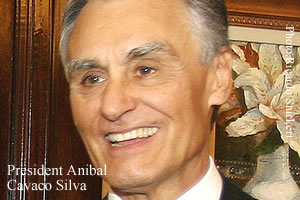
President Anibal Cavaco Silva said he forwarded four out of five of the bill's articles to the Constitutional Court because “he had doubts about its constitutionality.” The excluded article bans adoption by married gay and lesbian couples. Cavaco Silva, a Roman Catholic and a member of the PSD party, groups which oppose the legalization of gay marriage, has remained mum on why he set aside the adoption measure.
In an opinion released Thursday and written by Justice Victor Gomes, the court's majority agreed the bill is constitutional. Two judges disagreed.
Portugal's Socialist-controlled Parliament, led by Prime Minister Jose Socrates, approved the gay marriage bill on February 11.
The president still has the option of vetoing the legislation, but Socrates has said he is prepared to overturn the veto.
The Vatican has vociferously opposed laws that grant gay couples the right to marry. Pope Benedict has called for the ouster of Socialists in Spain who approved a gay marriage law in 2005, but the church's opposition in the Catholic stronghold of Portugal has been muted. However, Benedict is widely expected to criticize the bill when he visits Portugal next month.
If approved, Portugal would join five European countries – Spain, Belgium, the Netherlands, Norway and, most recently, Sweden – in legalizing gay marriage.

Related posts, gay marriage in Europe:

Gay Marriage - Coming to Iceland?

Gay Marriage, in Church: Denmark Next?

Marriage Equality: In Europe, a Human Right?

Marriage Equality: Is Cyprus Next?

Gay Marriage Europe Wide: 10 Year Forecast

Marriage Equality On All Continents!

Marriage Equality Gains More Ground

20 Years ago: Berlin Wall Falls; Death Knell for Apartheid; Birth of Marriage Equality

Gay Marriage - in Church


Gay Marriage for Iceland?

Last year, Iceland made its own small piece of LGBT history when it appointed Johanna Sigurdardóttir as the world's first openly gay or lesbian Prime 'Minister. Later this year, in a move no longer regarded as remarkable, it is likely to become the next country to recognise same sex marriage. Legal recognition of same sex unions began in the Nordic countries, way back in 1989, when Denmark made provision in law for a domestic partners register. Since then, Sweden and Norway have approved full marriage, and Denmark is planning to follow suit. This will leave Finland as the only Scandinavian country without full marriage equality, but I don't imagine the Finns will want to lag too far behind their neighbours. When they do follow suit, that will create an entire geographic region of countries with full marriage for all and at least two, Sweden and Denmark, providing for church marriage as well as civil marriage. Watch this space.


Lesbian PM, Johanna Sigurdardóttir

Iceland Likely to Permit Gay Marriage by June


Iceland, the tiny island country of 320,000 people in the North Atlantic, will likely be the next nation to legalize same-sex marriage. Openly lesbian prime minister Johanna Sigurdardóttir presented a revision to current marriage law to the Icelandic parliament on March 23. The revision is widely expected to become law, and if (or when) it does, the first same-sex marriages could happen as early as June 27, 2010, the date of Gay Pride in the capital city of Reykjavík.
Since 1996, Iceland has had a legal domestic partnership registry for heterosexual and homosexual couples. Gay and lesbian equality was further strengthened in 2006 with laws guaranteeing the same social rights as heterosexuals to lesbian and gay men in the spheres of social security, taxation, labor, and other social services. Currently, registered same-sex couples also have the same access to adoption as heterosexuals who are married or in registered domestic partnerships.
Despite its size, Iceland is a dynamic nation, and this includes its landscape. The recent eruption of a volcano in the remote area of Fimmvörðuháls has created a new mountain. Minister of Education and Cultural Affairs Katrín Jakobsdóttir has convened a committee to assist in naming the new landmark, but they are also seeking suggestions from the public. We at CarnalNation think that the name of the new mountain should in some way commemorate the Icelandic commitment to equality for gays and lesbians. Suggestions can be sent to the Ministry here.

Related posts, gay marriage in Europe:

Gay Marriage, in Church: Denmark Next?

Marriage Equality: In Europe, a Human Right?

Marriage Equality: Is Cyprus Next?

Global Marriage Equality: Slovenia Advances

Gay Marriage Europe Wide: 10 Year Forecast

Marriage Equality On All Continents!

Marriage Equality Gains More Ground

20 Years ago: Berlin Wall Falls; Death Knell for Apartheid; Birth of Marriage Equality

Gay Marriage – in Church


Iowa Gay Marriage: Here To Stay.

The first anniversary of marriage equality is a good time to take stock. When the state Supreme court ruled in favour of marriage for all last year, many people in this rural, mid-West and moderately conservative state were outraged.  Opinion polls showed that most voters did not support same sex marriage, and opponents vowed to fight for repeal. When the Governor and the Democratic controlled state legislature did not take immediate action towards changing the state constitution, the opposition vowed to turn marriage into an election issue. Superficially, the signs look good for them, with the Republican candidate for governor leading in the polls. But, for all the brouhaha, marriage is here to stay.  On this at least, you can safely ignore the sound and the fury – it signifyeth nothing. 


The death warrant for repeal was signed last week, when the legislative session ended without taking any action to initiate a process for a ballot on a constitutional amendment. This effectively eliminates any prospect of a successful ballot to repeal same sex marriage.    The problem for the conservative activists is the time scale: the earliest that the issue can appear on a  ballot is now four (and a half ) years away, in November 2014, as any proposal must first be approved by two successive two-year state legislature sessions. With strong Dem opposition to repeal, this will require a Republican takeover of the state legislature as well as the governor’s mansion, and a subsequent retention in 2012.  Is this likely? Even if it is, this will not necessarily be enough.  Many Republicans are learning that social conservatism is no longer the hot button route to electoral success that it used to be, and are more concerned to campaign on economic and financial concerns. They will know that opposition to gay marriage and support for changing the constitution do not always go hand in hand. Even in September last year, a poll showed that Iowans were evenly split on the issue of changing their constitution, even as they continued to oppose the principle of marriage.  So, even if there is a Republican takeover of the legislature, a vote for a ballot will not be guaranteed next session – and is still less likely for the next one, following 2012.

Still, let us imagine the worst:  let us assume that somehow, legislators get it right, and a constitutional amendment makes it to the ballot for 2014.  Will it pass? My view is simply – no way.  By then, Iowans will have lived with marriage for nearly six years. They will have learnt that all practical purposes, it has made little difference to their lives – except that some small businesses will found that they have been making some money from it, and some individuals will have found themselves unexpectedly attending weddings of family or colleagues that they did not even realise were gay.

When the Massachusetts court introduced marriage way back in 2004, even some liberals were angered. The battles for public opinion and in the legislature were heated and intense – and close. With the powerful backing of the Catholic church, opponents almost succeeded in forcing a popular ballot,  If they had done so, marriage there may well have been overturned. However, they did not quite get to force that ballot. Today, marriage in Massachusetts is a non-issue, and even the new Republican Senator will not support overturning it.

In another six years, Iowa will feel the same way.  Marriage equality in the mid-West, as in the North-east, is here to stay.   

Equality Struggle: Lessons From Latin America

Coming as I do from South Africa where I was born and lived for over half a century, I am acutely aware of the White South African tendency to think, speak and write from within a White mental framework, even as they live and work in an overwhelmingly Black country. South Africa though is in some key respects a remarkable microcosm of the world as a whole, and this is one of them: when we in the blogosphere write, many of us do so with a clear mental bias to the USA and Europe, paying scant attention to the remarkable advances elsewhere, notably in Latin America.


Pride Parade, Brazil

How do we explain this paradox of rapid political gains in a region where open intolerance and clear homophobia remain entrenched? What can we learn? Writing in Americas Quarterly (and reprinted at Huffpost, where I came acr0ss it) Javier Corrales has some thoughts on the political processes, which I will get to. First, I want to reflect on the significance to us in the Churches, that he is referring here to Latin America, the home of liberation theology.

Liberation theology, which was born in the slums of Latin America, had major impact on progressive thinking in the years before and immediately after Vatican II, until it met fierce resistance from the JPII/B16 partnership. The core ideas though, remain influential: that the Gospels are firmly on the side of the suffering and oppressed, and that by listening to their experiences, expressed in their own voices, the church can hear the Holy Spirit speaking to us for our times. Although the ideas emerged in the political context of Latin America, these ideas have also spread to other regions and spheres. They were hugely influential in South Africa, where the exponents were prominent in the long struggle for freedom, and also in Asia. It was also a formative influence on feminist theology, which in turn fed into gay and lesbian theology, and then queer theology. It is no coincidence that Marcella Althaus-Reid, one of the foremost exponents of queer theology (which she called "Indecent Theology"), came from South America. Her books exude the flavour and language of life in those Latin slums - and read like real life, far removed from the dry, distant theology that emerges from the Vatican ivory towers.

So, we as queer Christians have many lessons we can learn from the liberation theology of South America. Here is an edited summary of what Cabral has to say about the secular, political lessons:
From America Quarterly:
When most straight people are forced to think about gay people, they usually think of one thing first, sex. A political scientist might focus instead on a different question: how do gays perform in politics? Judged from their political achievements this past decade, the answer is, at least for Latin American gays: they're pretty good.
The political achievements of LGBT groups in Latin America in the 2000s are remarkable. Examples include: decriminalization of homosexuality (now complete in all Spanish-speaking countries and Brazil); laws against sexual-orientation discrimination (Brazil 2000, Mexico 2003, Peru in 2004); extending the same rights and obligations to same-sex couples as heterosexual couples (e.g., Buenos Aires 2002, Colombia in 2009); granting access to health benefits, inheritance, parenting and pension rights to all couples who have cohabited for at least five years (Uruguay); and constitutional bans against discrimination on the basis of gender, sexual identity or HIV status (Ecuador 2008). In the last two years alone the speed of change picked up, with most countries witnessing a significant legal change in the direction of more gay-friendliness, including the now famous Mexico City law recognizing gay marriage and adoption rights. [Please see index of chronology attached.]
Appropriately, he points to some specific lessons we can draw on methods to employ (emphasis is mine):
1. Embrace, not hate, globalization. Whereas the traditional left in Latin America has never quite come to terms with globalization, always responding to it with various forms of negativity ranging from suspicion to extreme repulsion--LGBT movements have adopted a more relaxed response: leverage globalization. LGBT groups systematically use resources provided by globalization and markets to enhance their bargaining leverage.
2. Party hard. A major mistake made by Latin American leftist social movements in the late 1990s was to disdain all things partisan. This generated a lot of unnecessary bad blood between parties and social movements that resulted in too much misallocated energy that helped neither group. LGBTs don't seem to display this hostility toward parties.
3. March hard. Like good old leftists, LGBT groups understand the power of a massive protest, especially in the streets. But their approach to taking the streets is not to go on strike, interrupt traffic during rush hour, shut down schools and hospitals, or vandalize private property, but rather, throw an annual gay pride march.
4. Wage wars peacefully. LGBT groups are engaged in an epic battle against homophobia. Like good old feminists, they are in a life-long struggle on behalf of gender and sexuality rights, and like good old human rights groups, they want equal treatment for all. But LGBT groups avoid two excesses associated with die-hard feminist and human-rights groups. They avoid launching wars against men in general, a problem that besets many feminist claims, and they avoid adopting too punitive an agenda.
5. Think anti-establishment; act intra-establishment. Like good old radicals, LGBT groups are motivated by anti-establishment, even utopian goals. To hope for a world free of homophobia has got to be one of the most idealistic goals of our times, and yet, all LGBT groups are committed to nothing less. LGBT political groups are thus as radical as they come. But their approach to changing the status quo is not exactly all that radical. Rather than destroy the status quo, they seek to work the status quo.
6. In battling conservatives, be fiercely conservative. The most significant development of LGBT politics in the Americas in the 2000s was the eruption of the marriage issue. This was never the top preference of LGBT groups, neither in the United States, where this issue began, nor in Latin America, where this issue has since become quite central in some of the larger countries. In terms of things for which to fight, LBGT across the Americas in the early 2000s would have preferred different battles, such as workplace discrimination. But LGBT groups immediately discovered the political advantage of embracing the marriage issue. It gave them a conservative argument to use against their conservative foes.
7. Draw business lessons. LGBT groups are succeeding in politics also because they are drawing lessons from the business world. From the ad industry, to give one example, LGBT groups have drawn the lesson that nothing sells like the creation of status symbols. Thus, LGBT groups have created the notion that being pro gay is a symbol of being modern, cosmopolitan, and hip.
8. Pop! Pop Culture is the new Populism. Like good political strategists, LGBT movements understand the advantages of appealing to all sectors of the population, and specifically, to both the privileged and the underprivileged. The old left in Latin America tries to create this cross-sectoral political alliance by promising too much from the state, a strategy that often flops and disappoints. LGBT groups have developed a less error-prone approach. They use pop culture as the new populism.
9. This revolution will be YouTubized. LGBTs not only do well as shapers of pop culture, but also as users of the latest medium to transmit pop culture: YouTube. Anytime there is an LGTB-related video out there, LGBT groups share it with hurricane force. Thus, a video about a hate crime in San Juan, or a video of a gay wedding in Argentina, or a video of a homophobic declaration by a bishop in Mexico is instantly watched and deconstructed in the LGBT cyber world.
10. The next gay revolution: Liberté, egalité, (p)maternité. The next LGBT revolution will not only be YouTubized, but it will also involve another remix of traditional and non-traditional icons of the Western world. LGBT groups know that their ideological forté is to focus on old-fashioned principles of the Enlightment--liberty and equality. Much of their success stems from their refusal to privilege one principle over the other, as the hard left and hard right often do, but rather, to always portray the fight for LGBT rights as a struggle for freedom and equality simultaneously. LGBT in the Americas are now launching their next struggle--the fight for p/maternal rights. Once again, they will use iconic emblems (liberty and equality) to transform a traditional aspiration of humans (the desire to raise a family) into a new democratic right: the right of LGBT people to adopt children.
In sum, what we have here is more than just amateurish politics. Like few other leftist social movements, LGBT groups have developed ingenious responses to some of the most pressing issues of our time: unrestrainable globalization (exploit it), strained political parties (respect them), unevenly-performing democratic institutions (fix them and work with the fixed ones), rising religiosity (talk the language), political cynicism (mobilize the young), attention deficit disorder for the written word (YouTubize everything), machismo and homophobia (rebrand the concept of gayness), increasing corporatization of citylife (buycotts). Most members of LGBT groups started out feeling ostracized, but they responded by working the system and building alliances with the system's untouchables. Because they are ideologically on the left and yet their responses to these challenges depart from traditional leftist responses, LGBT groups could very well be considered the first post-left leftists of the twenty-first century.
The strategies of LGBT groups, as with all innovations, are neither infallible nor immune to criticism. There is an inherent contradiction, for instance, in a movement that fights for equality by simultaneously relying on status categories of hipness and cosmopolitanism, to mention just one problem. It is not entirely clear either that all these strategies are especially impactful or appropriate for low-income communities. No doubt, philosophers have ample material here for debate in the years to come.
But there is no question that LGBT groups are emerging as the superstars of politics. Their approaches are succeeding in unexpected ways, especially considering the odds against them. LGBT groups will not win all their battles, but they have already revolutionized the way we ought to think about effective contestation in twenty-first-century democracies. As in so many other domains, LGBT folks in politics have proven to be, yet again, epochal trend-setters.
Read the full article at: Americas Quarterly.


APPENDIX : LGBT Victories in Latin America 2008-2009:
  • - February 2008 - Venezuela. The Constitutional Branch of the Supreme Court issues a ruling that, on the one hand, recognizes that discrimination against sexual orientation is unconstitutional, but on the other hand, states that there does not exist constitutional protection for same-sex partnerships; only the legislature can confer such protections.
  • - March, 2008 - Nicaragua. A reform of the Penal Code legalizes same-sex relations and ends an anti-sodomy law.
  • - March 2008 - Brazil. Police estimate that more 3 million people participated in the 12th annual Gay Pride March; both the Sao Paulo government and Petrobras sponsor the march.
  • - June 2008 - Brazil. President Lula launches the "First National Conference of Gays, Lesbians, Bisexuals, Transvestites and Trasnsexuals in Brasilia.
  • - June 2008 - Cuba. New president, Raúl Castro, authorizes offering free sex-change operations for qualifying citizens, a policy change advocated by Cuba's National Center for Sex Education (presided over by President Raúl Castro's daughter, Mariela Castro).
  • - August 2008 - Panama. Government repeals a 1949 law criminalizing gay sex.
  • - September 2008 - Ecuador. Voters approve the country's 20th constitution. Article 11 bans discrimination on the basis of "gender identity," "sexual orientation," and "HIV status" (but still defines marriage as the "union between man and woman," Art. 68).
  • - December 2009 - United Nations. The United Nations General Assembly affirms that international human rights protections include sexual orientation and gender identity. The statement is read to the Assembly by Argentina; 12 of the 66 countries that signed on were Latin American.
  • - January 2009 - Mexico. In a unanimous vote, the Supreme Court rules in favor of a man-to-woman transsexual requesting the reissuing of a new birth certificate that would not reveal the change in her sexual identity.
  • - January 2009 - Colombia. The Constitutional Court upholds a lower court opinion that same-sex couples must be accorded the same benefits as heterosexual couples in common-law marriages. This ruling grants same-sex couples equal pension, survivor, immigration and property rights.
  • - February 2009 - Bolivia. New constitution bans discrimination on the basis of "sexual orientation" and "gender identity" (but only recognizes "marriage" and "free unions" as occurring "between a woman and a man").
  • - February 2009 - Chile. The Unified Movement for Sexual Minorities (MUMS) organizes the first-ever mass wedding for sexual minorities in front of the Metropolitan Cathedral.
  • - September 2009 - Uruguay. With a 17-6 vote the legislature approved a bill that ends restricting adoptions to married couples, what many interpreted as paving the way for adoptions by same-sex couples. Earlier, Archbishop Nicolás Cotugno of Montevideo condemned the bill as going "against human nature itself, and consequently, ... against the fundamental rights of the human being as a person."
  • - November 2009 - Argentina. A Buenos Aires judge ruled that it was unconstitutional for civil law to stipulate that a marriage can exist only between a man and a woman. A marriage licence was then granted to Alex Freyre and José María Di Bello. This became the most controversial marriage in modern Argentine history, with debates on TV, marches, and hostile posters on billboards across the city. The archbishop of Buenos Aires, Jorge Bergoglio, publicly criticized the city's mayor, Mauricio Macri, for not appealing the judge's decision to grant the marriage licence.
  • - December 2009 - Mexico. In a 39-to-20 vote with five abstentions, Mexico City's Legislative Assembly approved marriage rights for same-sex couples. In a separate vote, the Assembly also approved adoption rights by a vote of 31 to 24 with nine abstentions.


Source: Corrales, Javier and Mario Pecheny, eds. 2010. The Politics of Sexuality in Latin America: a Reader on Lesbian, Gay, Bisexual and Transgender Rights. University of Pittsburgh Press.

Blog Archive