Remember Jazz, the young transkid from Barbara Walters 20/20 report on transgender children? Well, here's another example of a kid, once their trans issue is dealt with developing to be a happy and well adjusted human being.
Peep this video of Jazz singing.
Showing posts with label transkids/transteens. Show all posts
Showing posts with label transkids/transteens. Show all posts
Transgender Children's Bill Of Human Rights
 TransGriot Note: While doing research for another post, I stumbled across a site with this Draft Transgendered Children’s Bill of Human Rights. It was penned by Natacha Kennedy, who got the inspiration for it from an original idea by Trans Youth Family Allies.
Transgendered children have the right;
· to be called by a name they recognise as their own and to have the personal pronoun (he/she) which they prefer used to describe them,
· to be accepted by everyone as the gender they prefer,
· to appear on the outside the way they feel on the inside,
· to live with their parents, not be taken away because of their gender identities and to have their parents informed about gender identity issues
· to know that they are transgendered, even if they decide to conceal their gender identities from adults, and to know that they are not weird, deviant, unacceptable or evil.
· not to be abused, teased or bullied by other children or adults for being transgendered,
· to be supported by all adults working with them in school and other support services,
· to be taught by teachers who understand the nature of gender identity in transgendered children, and to be given the language with which to talk about themselves.
· to be in a school where other pupils have been taught about gender identity and where they can feel safe,
· to wear whatever clothes make them feel comfortable,
· to decide which toilet to use and which clubs or sports teams to join,
· to learn about other people whose gender identities are different from the majority of people,
· to go through puberty in a way which is acceptable to them,
· to be given the same opportunities to succeed in their education as all other children,
· to self-determination, dignity, respect, non-interference, to make informed personal decisions,
· to a voice in any situations where decisions are being made about their future.
Trans Teen Has High School Dress Code Issues In Cobb County, GA
 Ah, what would a school year be without some kind of dress code controversy, be it at the beginning or the end of the school year during prom season.
 Why am I not surprised about this one? This is the same Cobb County that gained a worldwide negative rep for having an Olympic preliminary volleyball venue taken away from it before the 1996 Atlanta Games because of an anti-gay resolution it passed in August 1993.
The resolution passed by the Cobb County Commission but rescinded in 1997 stated among other things "that the life style advocated by the gay community should not be endorsed by government policy makers because they are incompatible with the standards to which this community subscribes."
I found out about it thanks to Pam's House Blend and the Atlanta Journal Constitution. BTW, I'm going to use feminine pronouns in this story, especially since she stated in the article, "I don't consider myself a cross-dresser. This is just who I am."
Jonathan Escobar moved from Miami to Kennesaw, GA to live with her older sister and attend North Cobb High School. Her old school in Florida didn't have a problem with her dressing in feminine attire, but her parents did.
Before beginning school at North Cobb, Escobar asked administrators about the dress code and asked if she could wear items like high heels, and brightly colored wigs.
She was told there wouldn't be a problem, but four days after starting school at North Cobb High School the fun started.
Kids will be kids, and someone started cracking jokes at her expense. A friend stood up for her and unfortunately a fight ensued.
School administrators told Escobar that she was now in violation of the section of the North Cobb High School dress code that states:
"All students shall be required to…refrain from any mode of dress which proves to contribute to any disruption of school functions.”
Translation, Escobar was told she had to dress more like a male or she couldn’t come to school.
Her sister Veronica says she's shocked by what has happened.
"I didn't think they would take it this far," Veronica Escobar said.
Escobar says she wasn't a disruption in the classroom, but she attracted attention in the lunchroom. "Everybody was surrounding me," she said.
On her second day of school, Escobar says he was pulled out of class to speak with a police officer who told her he was concerned about the student's safety.
"They should've told the students to back off," Escobar said. "They should have never given me the option of homeschooling or changing who I am."
In her short time at the Kennesaw school, Escobar has apparently made a lot of friends. By Tuesday evening, nearly 900 supporters had joined a Facebook group called "Support Jonathan." Many were planning to purchase a bright pink T-shirt with the same phrase.
Escobar says she wants to be allowed to attend school and eventually graduate. But she doesn't want to stifle what she calls her art.
"If I can't express myself, I won't go to school," he said. "I want to get the message out there that because this is who I am, I can't get an education."
Transparent

I just finished reading Transparent by Cris Beam. It's an interesting nonfiction book about several Los Angeles Latina and African-American transkids covering a period from 1998 to 2005.
One of the people featured in the book, Foxxjazell was familiar to me. I just wrote a blog post last month on her increasing popularity in California's rap scene as a transgender rapper. It was interesting to read her background story.
Some of it was sad, some triumphant. Some of their stories hit home and triggered some emotional memories concerning some things I was dealing with in my own childhood.
Cris Beam also weaves transgender history, science, and knowledge throughout the book. If you want to get some insight on some of the issues we deal with and how they affect these transkids, you may want to pick this book up and add it to your collection.
Crystal Vera's Quest For The Crown
 High school senior Crystal Vera created a lot of buzz when she ran for prom queen. Now the trans girl is ready to tackle the future.
 By Michelle Garcia
An Advocate.com exclusive posted June 26, 2007
At 19, Crystal Vera has already made history. This May the high school senior at Roosevelt School of the Arts in Fresno, Calif., became the nation's first transgender prom queen.
Her moment of glory attracted massive attention: MTV and Bravo wanted interviews, Fresno's gay pride parade named her as grand marshal (she rode in the parade in her tiara, sash, and sparkly blue gown), and the blogosphere buzzed with news of her win. For the LGBT community, Vera's win was a remarkable statement—and one Vera initially had reservations about making.
“My friends would constantly ask me to run for queen,” she says via phone. “But I just wanted my prom to be fun and my senior year to be relaxed. I didn’t want to be stressed-out. I knew that this would take a lot of work.”
Eventually those friends wore her down. One day Vera walked into the school cafeteria to find a mob of supporters urging her to put her hat in the ring.
“I was so touched by how my classmates accepted me, and that they respected me so much that they would want me to be prom queen,” she remembers. So Vera’s campaign began. She handed out rainbow flyers and chatted up her classmates, the high school equivalent to shaking hands and kissing babies. The Roosevelt School of the Arts, where Vera (still known to some teachers and classmates as Johnny) excelled as a student, cheerleader, and dancer, is a progressive magnet program for fine arts with a student body of 500 students. But before Vera's run for queen, no one knew just how progressive the program was.
In the end, the transgender teenager beat the other contenders, whom she described as equally popular and well-liked as she, by a 5-to-1 margin.
 After the prom the whirlwind continued. "The following Monday when I walked into each of my classes, my peers would all get up and clap for me,” she says. “When I went to lunch, the whole cafeteria—I will never forget this—everybody was clapping. It’s just so wonderful to know that times are changing. People are changing. Things like this bring us hope as individuals that things will be better off for us.”
 In September, Vera will study fashion design at the California College of the Arts, something she's dreamed about doing since she was 14 years old. Whatever challenges she may face, she'll always be able to draw strength from the memory of her prom.
“A year from now, if I’m going through a hard time," she says, "it will be good to look back and remember that not all people are cruel and rude."
Transgender Teen Free To Be Herself

By DEBRA DENNIS / The Dallas Morning News
debdennis@dallasnews.com
photos by Ben Sklar / The Dallas Morning News
12:00 AM CDT on Sunday, May 20, 2007
FORT WORTH – When Rochelle Evans chooses what she's going to wear to Eastern Hills High School each day, her choices aren't solely fashion statements. To Rochelle, her flats, makeup and women's jeans represent a hard-fought right to express herself.
And a subtle declaration about transgender teens everywhere.
The 15-year-old transgender sophomore, who started high school as Rodney Evans, recently fought a public battle against school administrators over wearing women's clothes and her reaction when confronted by school officials. As part of the deal, Rochelle is addressed as a female and gets to use the nurse's bathroom to avoid
any awkward scenes in the boys' or girls' restroom.
I just felt more comfortable being a girl," she said. "I'm not asking for any special treatment."
For a while, she attended classes wearing both male and female attire but said that felt like a compromise.
She got herself suspended when asked not to wear her wig, fake breasts and short skirt to school.
Her attorneys met with school officials this month and hammered out an agreement that got her back in school. And Rochelle must attend summer classes to make up for missed classes.
 "There was never a day when I was Rochelle for the whole day," Rochelle said. "I love makeup. I started wearing makeup because it helped to complete me more. It made me feel more like a girl. With the help of makeup, you can create your own kind of life."
She has learned to make the six-block walk to school in high heels.
Her schoolwork is tucked inside a large book bag that doubles as a purse.
Rochelle says she willingly toned down to less flashy attire – going from skirts to jeans – but wants the dignity of her pronouns.
"I have earned them," she said.
Transgender teens are demanding acceptance in all facets of society including school, said Simon Aronoff, deputy director of the National Center for Transgender Equality in Washington, D.C.
"Ten years ago, a transgender teen would not even consider being true to their gender while at school," Mr. Aronoff said. "But now we have youths who are coming out to their parents and wanting to go to school in the gender they feel more comfortable in. Sometimes, the younger generations are more accepting."
Lenora Felipe, Rochelle's mother, sides with her, although her support was not easily won.
"I admit I was confused," Mrs. Felipe said. "She's always been very feminine. I thought, as long as I keep putting him in boys' clothes, he's a boy. Well, that didn't work."
With counseling, Mrs. Felipe said she was able to better understand that her son is a transgender male who cross-dresses.
"I had to accept that," said Mrs. Felipe, a barber who has two other children – an 11-year-old girl and 14-year-old boy. "I was still being educated, but when it all came to the surface, I didn't understand. Why fight it? I support and love my child and try to make her safe and happy."
But that did not mean acceptance by all.
Mrs. Felipe said she was bombarded with calls from school administrators who said Rochelle's dress was disruptive.
They also complained that she skipped classes and used curse words when confronted by adults.
Rochelle's attorneys, Jerry W. Simoneaux and Phyllis Randolph Frye of Houston, worked out an agreement with school officials.
"They were addressing her as 'Rodney' and as 'he,' " Ms. Frye said. "Transgender is nothing new. It's gone through the schools. If it helps her to be able to deal with all of the problems that teens go through, then she should be allowed to say how she wants to be addressed."
Fort Worth school officials say they are committed to ensuring the safety of all students.
"The district vigorously enforces the student code of conduct, especially when it comes to harassment and bullying," said Chuck Boyd, the district's director of secondary school leadership. "We assure that all students are going to be treated safely and fairly. Our mission is to afford anyone a fair and appropriate education."
Rochelle and her friends say that her transformation has caused only a few problems at school.
La'Star Hardwick, 16, has been friends with Rochelle since both were in seventh grade.
She still calls her "Rodney" – a habit she has yet to break.
"Most of the students are cool, but there are some boys who act like they're uncomfortable," said La'Star. "But it's just a few, and they are not bullies."
Rochelle said she hopes to promote an understanding about transgender issues. She said she felt bullied mostly by school officials, not by classmates. Her classmates are asking questions and seeking answers, she said.
"I look at the world now and everyone knows there are transgender teens in Fort Worth," Rochelle said. "Some students thought I was gay, and I would say I'm not gay, I'm transgendered. They had no knowledge what it meant.
"They are trying to understand what it means and understand how I feel," she said. "They are asking me questions, doing their own research. They're on the Internet. In some ways, I'm a teacher."
Transgender Prom Queen
 TransGriot Note: photos-Crystal (Johnny) Vera after being crowned, Toby (Cinthia) Covarrubias tux fitting, my classmates Jimmy Hernandez and Michelle Baines from the Jesse H. Jones 1980 prom, Crystal Vera and friend in official photo.
 Remember when I posted the AP story last May about the drama Kevin Logan underwent in Gary, IN last year? The African-American transgender teen spent her entire senior year living as a female but was denied entry to the prom.
 What a difference a year makes. Nice to see this inspiring story from the Fresno Bee concerning transteen Crystal (Johnny) Vera. Vera was crowned prom queen at Fresno's Roosevelt High School less than a month after Toby (Cinthia) Covarrubias' newsworthy run for prom king at Fresno High School.
 Covarrubias didn't win but said at the time of his candidacy that he hoped to break the ice for other students who are transgender. Looks like that just happened, but I am saddened to hear that Toby has had much Hateraid thrown his way since the story broke on CNN.

Seeing all this news about proms made me recall my own back in 1980. I remember how out of place I felt sitting at the table with my friends in a powder blue tux secretly envious (and jealous) of my female classmates who were wearing their prom dresses. I liked growing up in the 70's but there are times that I wish that I was growing up as a transteen right now.
 It reinforces the points that me and other transpeeps made on the Hill over the last few days.
We're here and we're Americans too. Just like anyone else we want a fair shot at contributing our talents to helping build our country and living quality lives. We aren't going away no matter how much screaming comes from the christobigots and haters.
See Tom Be Jane

The country's youngest transgender child is ready for school. But is school ready for her?
by Julia Reischel
The Village Voice
May 31st, 2006
It's a spring break morning, and by 11 a.m. at the Anderson home, chaos is erupting. School is out for the week, and the twin boys are throwing a ball inside the spacious, two-story house. Upstairs, the preteen daughter pretends not to hear her mother calling. Lauren Anderson, a tanned and well-dressed stay-at-home mom who seems incapable of sitting still, cajoles her offspring to behave as she waits for a babysitter to arrive.
Her youngest, Nicole, five, is frowning. Nicole's face is framed with delicate brown braids, and her fingernails are painted a rainbow of colors. She plans to go swimming with a friend at the community pool, but at the moment, she doesn't like the way her dress feels. She yanks the hot-pink halter-top over her head, telling her mother, "This is poking me. I want to change my dress."
Minutes later, she scampers back, now as naked as a jaybird except for her underwear. Without the dress, you can clearly see her penis, tucked carefully into her pink patterned panties.
Born a biological male whom the family named Nicholas, Nicole today dresses, acts, and lives like a girl. She's been insisting she's female since she could talk, say the Andersons, who asked that their real names not be used for this article. "He has always been attracted to the flowers, the bright colors, his Barbie dolls, and his beloved mermaids," Lauren says, using the male pronoun for her child. In fact, talking with Lauren, who fully supports Nicole's desire to live as a girl, it's clear that the family is still working out the grammar of how to refer to its youngest.
"As a young toddler, he wouldn't let me snap her onesies together because she wanted to wear a 'dwess' like his sister," Lauren says, mixing pronouns like he and her interchangeably.
Lauren admits that the family is feeling its way down a path very few families find themselves navigating. Although it's common for young boys to play with dolls or paint their nails—what parents classically refer to as "a phase"—it's much rarer for a child to so completely identify as the opposite sex. And what to do about it has been the subject of fierce debate for decades.
Nine years ago, a Belgian film, Ma Vie en Rose, explored the most common reaction to a young boy's decision to live as a girl. In other words, the parents panicked. So did the rest of the neighborhood, who shunned and ridiculed the boy's family until they felt compelled to move away. In real life, meanwhile, another famous case in 2000 ended even worse. When Zachary Lipscomb's parents attempted to enroll him as a girl named Aurora in an Ohio school at age six, a state child protection agency took the child away.
Some therapists insist that such children should be discouraged from living as the opposite sex because, they have found, the large majority of such children grow out of it. Studies show that many end up as gay adults. But a growing coalition of therapists, scientists, and activists disagree and refer to such children—even those as young as three years old—as transgendered, insisting that the child's new identification shouldn't be discouraged.
The Andersons are in the latter camp, encouraging Nicholas to be Nicole. Experts consulted by this reporter say the Andersons are the only family in the United States supporting a five-year-old's choice to live as the opposite sex. This fall, the Andersons plan to enroll Nicole in a Broward County, Florida, kindergarten class as a female. They are convinced that's the only way she'll be happy.
That decision has rallied much support for the family's side. There's attorney Karen Doering of the National Center for Lesbian Rights, for example, who represented Michael Kantaras, a female-to-male transsexual, in a widely publicized 2004 victorious custody battle in the Florida Supreme Court. Kantaras, who won joint custody of his two children when the court ruled that his parental rights were not nullified by his sex change, was the first transsexual parent to win such a high-profile victory. Doering is advising the Andersons as they wait to hear from school officials, who so far have given no indication of how they plan to prepare for Nicole's enrollment.
And that's where Nicole's story veers even further from the ordinary. Because trying to pressure school officials to address the Andersons' concerns is a person who could be either a big help or a big distraction.
Mark Angelo Cummings, a man who once was a woman, has become something of a Spanish-language television talk-show phenomenon. Cummings's outspoken appearances, which have wowed Latino TV hosts with stories of his transformation, are leading to a new openness about transsexuality in the Latino community. And Cummings plans to use his celebrity, such as it is, to promote Nicole's cause.
This fall, whether it's ready or not, the Broward School District will make some sort of history. Thanks to a showboating transsexual guardian angel and the little boy who insists he's a girl.
--------------------------------------------------------------------------------
On a recent morning, it takes a lot of coaxing to tear Nicole away from watching The Ten Commandments to tell a reporter how she feels about being a "special girl."
"Do you know why you're a special girl?" her mother asks.
"Because... I have a girl brain in a boy body," Nicole says, lowering her usual penetrating voice to an almost inaudible sigh.
"What does that feel like? Does it feel good? Or is it hard?"
"Hard," Nicole says.
When her mother asks her if she's happy with the way she looks, she says no.
"What would you change about yourself?"
"Mm... my penis," Nicole murmurs.
"What would you do with it?" her mother asks.
"Um... cut it," Nicole replies, very softly.
"And what would you do with it then?" asks a surprised Lauren, who later says she's never before heard Nicole express dislike for her penis.
"I would hammer it," Nicole says.
"What?" Lauren says.
"Hammer it," Nicole insists more strongly.
Later, Lauren says she constantly feels as if she's flying by the seat of her pants. "There is no protocol," she says. "Nobody knows of anybody. No five-year-olds who go to school fully transitioned. There's no book called How to Raise Your Gender Variant Preschooler."
Nicole "carried like a girl" when Lauren was pregnant, but when Nicholas was born, he was definitely a baby boy.
"So we dressed him all boyish," Lauren says, as she fondly turns the pages of a fat baby album. There are pages and pages of little Nicholas—with his family smiling at his bris, dressed in a tiny football uniform, being hugged by his older siblings. Nicholas looks happy. But Lauren says his desire to be treated like a girl was constant.
"At first, I thought it was cute," she explains. "I don't have a problem putting nail polish on a little boy. I don't have a problem if my son plays with dolls. His older brothers went through a similar period of doll playing and asking for nail polish on their toes. There's no reason to say no to a phase. I never once said 'no.' A phase is a phase."
So baby Nicholas was allowed to wear high heels. To play with Little Mermaid and Barbie dolls. To grow his hair a little longer. But instead of being satisfied with these concessions, Nicholas always asked for more. One day, he asked for something his parents weren't expecting.
Lauren was sitting at her computer working when two-year-old Nicholas, who, like all the Anderson children, had a frank understanding of anatomy, came to her with a request: "I want the fairy princess to come and make my penis into a vagina," he said.
Lauren mentioned Nicholas' strange demand to his pediatrician at the child's three-year birthday checkup, expecting to be told that the behavior was part of the phase. "She got a concerned look on her face," she says. "This was not the reaction I was looking for." The Andersons were advised to look into Nicholas' desires with the help of a therapist.
Frightened, Lauren says she turned to her college copy of the Diagnostic and Statistical Manual of Mental Disorders (DSM) and looked up something called "Gender Identity Disorder," the clinical term for transsexualism. It seemed to describe Nicole's behaviors exactly.
The Andersons called Marcia Schultz, a psychologist in Coral Springs. One session with Nicholas, who was then three, convinced Schultz that he had a form of GID.
"Nicholas is a transsexual who wants to be a woman," Schultz says.
Through Schultz, the Andersons met Heather Wright, a jovial and frank male-to-female transsexual with a hearty handshake who lives in Green Acres with her female partner and their three children. They took Nicholas to see her. Wright immediately noticed that little Nicholas seemed uncomfortable in his body.
"He was definitely very quiet," Wright remembers. "He definitely wasn't happy with having to wear the clothes he was wearing. One of the things he was upset about was he wanted to wear girl clothes. All he got away with was getting Little Mermaid flip-flops."
After meeting with Schultz and Wright, the Andersons began allowing Nicholas to act and dress like a girl in the safety of their home or in the anonymity of the grocery store or at Disney World. That summer, Nicholas' camp even allowed him to wear a girl's bathing suit. But at preschool, Nicholas remained a boy and seemed satisfied with relegating his girl time to afterschool hours. Until he turned five.
"Right at the age of five, it was like 'boom,' " Lauren says. "Since he hit five, he totally rebelled and refused to wear boy clothes. Every single day was a fight. By the end of the school year, she looked like a totally different child."
Today, Nicole gets to be all girl at home and is supposed to be "neutral" in public at her preschool, where many of her friends, all girls, call her "she." But every day, Nicole chips away at the vestiges of her boyhood.
"I try to do the neutral thing, and it doesn't work," Lauren says, "Slowly, every day, a new article of clothing will come out of the closet. And we end up looking like a girl."
Nicole has settled on a gender, but there's little else that's settled when it comes to Gender Identity Disorder. Even the name itself—that a child like Nicole has a "disorder"—is contested.
Until 1973, homosexuality was listed in the DSM as a mental disorder; then it was removed after intense debate in the psychiatric community. And many transsexuals believe GID should have been tossed out at the same time. For some, however, GID continues to be a useful diagnosis that helps determine whether a person is a good candidate for sex reassignment surgery.
Politics about transsexualism permeates any discussion of GID. The only long-range scientific study conducted by psychologists, harshly criticized by transsexual activists, shows that many boys diagnosed with GID as children grow up to be gay males and that only a few continue to identify as female. Studies by endocrinologists, on the other hand, have uncovered some biological similarities in the brains of transsexuals, a finding that suggests that transgenderism is not something one can merely "grow out of."
All of which means that there's little anyone can agree on when it comes to treating five-year-old boys who want to be girls.
"There are three basic types of attitudes about this," says Heino F.L. Meyer-Bahlburg, director of the Program of Developmental Psychoendocrinology at the New York State Psychiatric Institute and a professor of psychiatry at Columbia University. "There are people who are strictly anti-trans kids who always try to modify the behavior. There are people who are strongly supportive, who from the outset would strongly encourage a transgender identity. Then there are the people sitting on the fence."
Kenneth Zucker, a psychologist who has treated hundreds of young Gender Identity Disorder children at the Centre for Addiction and Mental Health at the University of Toronto, is a well-known proponent of modifying behavior. He advises that children with GID undergo therapy to work through their hatred of their bodies before being accepted as transsexuals. His clinical research shows that he has an 80 to 90 percent success rate of steering young GID children away from living as trans adults. Gay and transsexual groups are harshly critical of Zucker, saying that his work encourages religious-right organizations that seek to "cure" gays of their homosexuality. But Zucker himself has taken pains to separate himself and his work from those organizations.
Told of the Andersons and their plans to enroll Nicole in school as a girl, Zucker says he's concerned that the Andersons have been swayed by an activist transsexual agenda and are ignoring the possibility that Nicole might simply be a troubled child. "Let's see if there are ways to try and help this child work this through," he says. "Instead, they're going to cement this in more and more." He says that what the Andersons are doing could be considered "some type of emotional neglect."
Meyer-Bahlburg is more ambivalent. "Force doesn't really work very well. On the other hand, I don't feel clear about strong encouragement in the transgender direction, because the vast majority of kids fall out of it," he says. When he treats GID boys, he advises his patients to beef up boyish activities and play with carefully selected male playmates.
The Andersons, however, side with experts who consider children like Nicole transsexuals. Lauren attended the annual Philadelphia Trans-health Conference this January, where gender-variant children was a main topic and the subject of panels such as one titled "How Young Is Too Young?" Most parents at the conference seemed to agree that it's never too early to support a child as a transsexual, even at age five.
"I would never want to force any person to be something they're not," says Tom Anderson, Nicole's father. "This is different from 'It's time to stop drinking chocolate milk from a baba' or taking away a blanket. This is the essence of the person."
Transgender Teen Shut Out of Prom
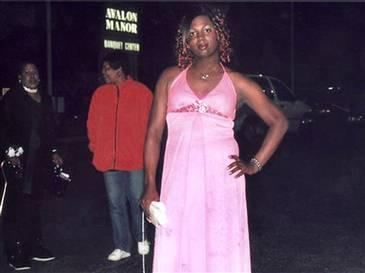 GARY, Ind.
 A transgender student who has worn women's clothes to school all year was turned away from her high school prom because she was wearing a dress.
Kevin Logan, 18, went to the West Side High School prom on Friday in a slinky fuchsia gown and heels. She believes officials discriminated against her by not allowing her inside.
"I have no formal pictures, no memories, nothing. You only have one prom," she said.
Logan received an $85 refund for her prom ticket Tuesday but was not satisfied. She said she is considering filing a complaint with the American Civil Liberties Union of Indiana.
Sylvester Rowan, assistant to Gary Schools Superintendent Mary Steele, said school policy bans males from wearing dresses. Excluding Logan from the prom was based on "the dress code, not the student's homosexuality. That's his personal preference."
Tyrone Hanley, the youth program coordinator for the Gender Public Advocacy Coalition in Washington, D.C., said he often sees cases like this and called it gender-based discrimination.
"Prohibiting really short skirts for everyone is a fair dress code; prohibiting them for males is not," he said.
Logan said she had spent years defining and exploring her gender identity. This year, she took a major step by dressing as a female every day, wearing makeup, a hair weave, nails and girls' fitted jeans to school.
His mother, Donnetta Logan, said she was not surprised by what she called the ignorance of school administrators.
"I tell Kevin that in society there will be those who accept him and those who won't."
© 2006 The Associated Press. All rights reserved.
TransGriot Note: Pronouns in story adjusted because original article is NOT in compliance with the 2006 AP Stylebook guidelines for writing stories on transgendered people.
From the 2006 AP Stylebook:
transgender: Use the pronoun preferred by the individuals who have acquired the physical characteristics of the opposite sex or present themselves in a way that does not correspond with their sex at birth.
If that preference is not expressed, use the pronoun consistent with the way the individuals live publicly.
Subscribe to:
Posts (Atom)